



Imagine: you're wandering through a futuristic world in a VR game, and you don't just see objects clearly—you can also smell them, and then taste them. Sounds like an episode of Black Mirror? Not at all!
In 2025, scientists from The Ohio State University turned our fantasies into reality by creating a device with the succinct name e-Taste. This is the first gadget of its kind, teaching virtual reality not only to show and narrate but also to feed users—or more precisely, to create the illusion of taste.
How It Works
The e-Taste system consists of two key parts: sensors that detect key taste molecules, and wireless chemical dispensers for transmitting taste signals over a distance. The sensors function like high-tech tasters: they recognize the molecules of the five basic tastes we all know. Sweetness comes from glucose, saltiness from sodium chloride, sourness from citric acid, bitterness from magnesium chloride, and the savory taste of umami (also described as meaty or brothy—prominent in Parmesan cheese, soy sauce, shiitake mushrooms, tomatoes, broths, and raw meat) is delivered by glutamate.
When the sensor touches real food, it converts the concentration of these substances into a digital signal and sends it wirelessly—for example, from California to Ohio, as the researchers successfully demonstrated. In other words, the data obtained from the sensors is transformed into electrical signals and transmitted to a device that recreates the taste using chemical solutions.
The development includes two more crucial components: an oral interface and a compact electromagnetic pump connected to a fluid channel. The pump is linked to a tiny tube that ends under the user's tongue. Inside the pump is a gel containing those very taste molecules. Upon receiving a command, the pump precisely mixes the required combination and squeezes a micro-dose of the gel directly onto the taste receptors.
It might not sound very appetizing (gel in your mouth is hardly a piece of cake), but the developers assure us: the intensity of the taste can be adjusted. The longer the solution contacts the gel layer, the richer the sensation. "Based on a digital instruction, you can release one or multiple tastes simultaneously, creating complex sensory combinations," explains Jinghua Li, an associate professor in the Department of Materials Science and Engineering and a co-author of the study.
What the Tests Showed
To test how convincingly e-Taste can fool the body, scientists conducted a series of experiments. First, they focused on a pure taste—sourness. A group of ten people was asked to rate the intensity of sourness in liquids generated by the system. The correlation with real products was about 70%. Not perfect, but more than respectable for a first step.
Next came an even more interesting phase. The researchers wanted to find out if the device could reproduce complex, multi-component flavors. Six participants were given "virtual" versions of five dishes to try: lemonade, cake, fried eggs, fish soup, and coffee. Here, the results were even better—in 87% of cases, the subjects correctly identified what they had been "served."
Jinghua Li explained that the key challenge was accurately reproducing sensations that are inherently subjective—they are formed through the interaction of taste (gustation) and smell (olfaction). After all, they are closely tied to emotions and memory, so our sensor must not only capture but also control these data points.
To prove that taste can be transmitted over a distance, the team sent a signal from California to Ohio—nearly 3,700 kilometers. Participants in Ohio experienced the same taste sensations as their colleagues on the West Coast.
VR Gastronomy and Beyond: Where e-Taste Will Be Useful
This application seemed most promising precisely for the gaming industry and metaverses. Imagine walking into a virtual cafe, ordering a mug of pixelated coffee, and actually tasting its bitter flavor. Or participating in a cooking show and sampling dishes prepared by an avatar of a celebrity chef. "The chemical dimension is largely absent in modern VR and AR. We are filling this gap," says Jinghua Li.
But e-Taste isn't just about entertainment. The technology has some quite serious prospects. For example, it could help people who have lost their sense of taste due to traumatic brain injuries or the lingering effects of COVID-19. The system could amplify weakened signals, allowing patients to perceive the taste of food again. Furthermore, the device could assist neuroscientists in studying how the brain processes signals from taste receptors—an area that is still very much a "black box."
Skeptics: Taste Without Smell Is Not Taste
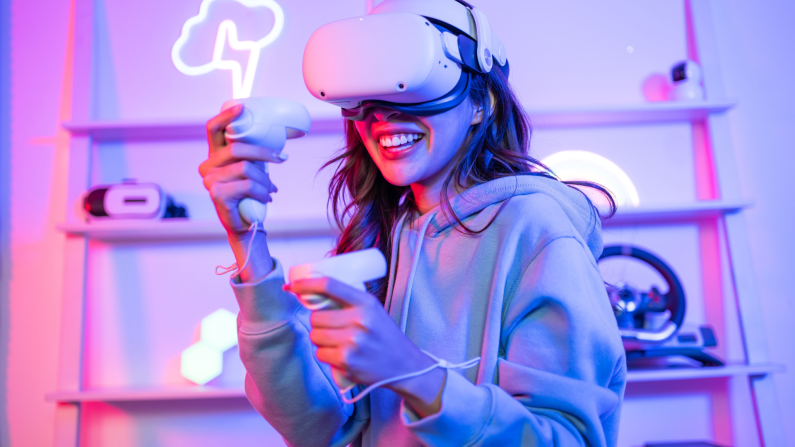
Despite all its successes, e-Taste is far from perfect. And the researchers honestly admit this. The main problem is that taste is inextricably linked to smell and sight.
"So, if you transmit only a sour taste using their device, you would never understand that it's actually a strawberry. An electronic tongue like this can extract the amount of sweetness and sourness—but not the flavor as it is perceived by the human tongue," clarified Professor Alan Chalmers from the University of Warwick in England.
Yizhen Jia, one of the project's authors, agrees: "Real coffee smells like coffee; it has its own texture. Simply applying chemicals to the tongue is not the same thing." Therefore, the team is already working on improvements: adding gas sensors to detect smells and planning to train a neural network to correctly combine taste and olfactory data.
Another issue is ergonomics. The wearable part of the device is still quite bulky and not very comfortable to use. The researchers plan to miniaturize the system, but even if it becomes the size of a toothbrush, the main problem remains: are people ready to constantly keep a tube in their mouth? "We are very conservative when it comes to putting something in our mouths. Appearance, feel, and comfort are critically important," notes Nimesha Ranasinghe from the University of Maine, another researcher not involved in the development. She believes we still lack a 100% understanding of how the tongue and taste perception work.
Who Else Is Trying Virtual Food
e-Taste isn't the only attempt to "digitize" flavor. Previously, scientists experimented with electrical stimulation of the tongue: weak electrical discharges simulated saltiness or sourness. However, this method isn't fully understood and yields far fewer nuances than the chemical approach.
In Japan, for instance, they are developing chopsticks that enhance salty taste using weak electricity, aiming to help people eat less salt. Meanwhile, in Singapore, researchers are creating "virtual" glasses that alter the perception of a drink through backlighting and tactile sensations.
For now, all these technologies remain in the lab. e-Taste is also still a long way from store shelves. A commercial version hasn't been announced, and when we might be able to buy a gadget to add a "taste" dimension to our VR headsets is unknown. But the scientists from Ohio see their development as the first step towards making taste a full-fledged element of the digital world. "This will help people communicate in virtual spaces in ways we never even imagined," says Li.
We are only at the beginning of the journey: e-Taste can create a plausible lemony sourness or coffee bitterness, but a full-fledged meal in the metaverse is still as far off as walking to the moon.
Nevertheless, 2025 will be remembered for this very breakthrough: virtuality has ceased to be just a picture. Now, you can taste it.
Share this with your friends!

Evan Mcbride



 10
10
Be the first to comment
Please log in to comment