


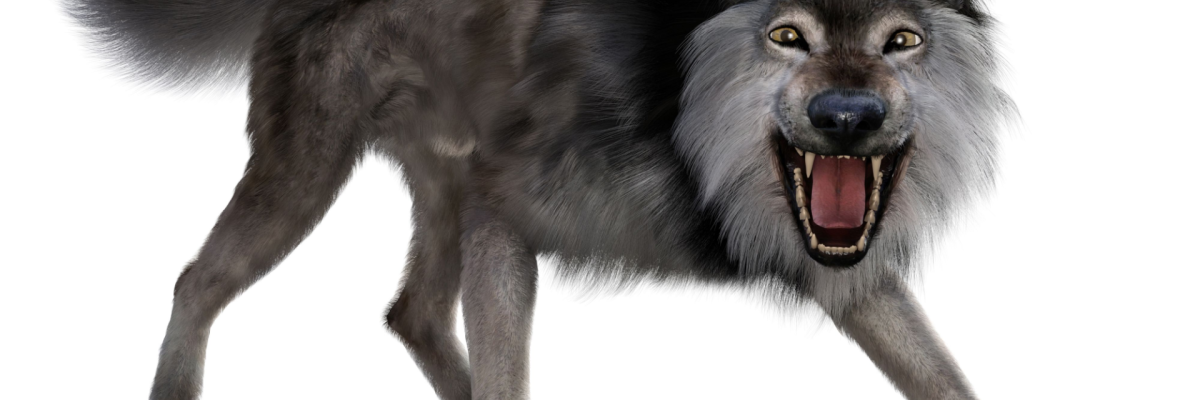
More than 13,000 years after the last representatives of this species trod the lands of North America, humans have decided to bring them back to life. This is how the first genetically modified puppies with the phenotype of the dire wolf were created.
Predators of the Ice Age
Dire wolves (Aenocyon dirus) were apex predators of the Pleistocene. They roamed the continent alongside saber-toothed cats and giant short-faced bears, hunting mammoths and bison, and their fossilized remains are found in abundance in the famous La Brea Tar Pits in Los Angeles.
Modern gray wolves look like lightweights next to them. Dire wolves were more massive — almost twice as large, with a broader skull, powerful jaws, and a muscular build ideally suited for hunting large prey. They disappeared around 13,000 years ago, when the end of the Ice Age brought about the extinction of many of the megafauna species that constituted their primary diet.
For a long time, scientists could not pinpoint the evolutionary origins of these predators. Some even speculated that their closest relatives might be jackals. But genetic analysis conducted by the company Colossal Biosciences set the record straight: the closest living relative of the dire wolf is the gray wolf, from which it diverged roughly 5.7 million years ago and with which it shares 99.5% of its genetic code.
How to "Resurrect" Something That No Longer Exists
The very idea of de-extinction — bringing back extinct species — sounds like the plot of a new installment of Jurassic Park. But reality, as is often the case, is far more complex and prosaic.
Founded in 2021 by entrepreneur Ben Lamm and legendary Harvard geneticist George Church, Colossal Biosciences set itself an ambitious goal: to use cutting-edge biotechnology to restore lost species. In just a few years of operation, the company has raised over $435 million and reached a valuation of $10.2 billion — with investors including Tiger Woods and Paris Hilton.
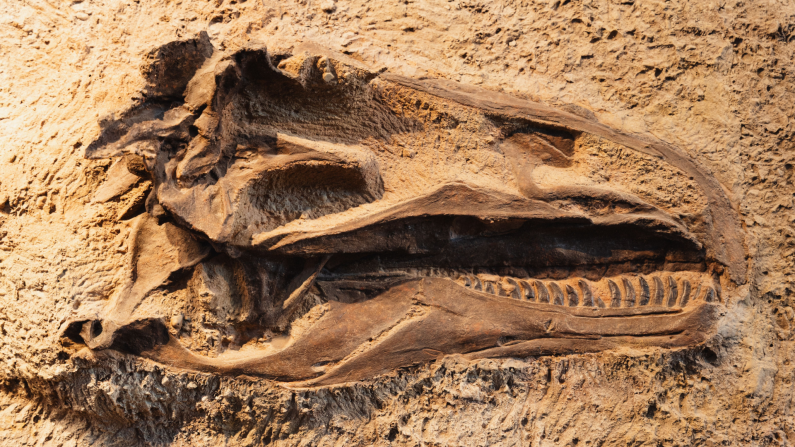
Work on the dire wolf began long before the puppies were born. The key came from two unique specimens: a 13,000-year-old tooth found in Ohio, and an ear bone (ossicle) dating back 72,000 years from Idaho. Unlike the thousands of specimens from the La Brea Tar Pits, where asphalt destroyed DNA, these fragments preserved enough genetic material for analysis.
"Ancient DNA is like taking fresh DNA and putting it in an oven at 500 degrees overnight," explains paleogeneticist Dr. Nic Rawlence from the University of Otago to the BBC. "It comes out all fragmented — bits and pieces. You can put it back together, but it's not good enough to do anything else with."
This is precisely why the scientists did not pursue cloning — it was simply impossible. Instead, they sequenced the dire wolf genome, generating 70 times more data than previous studies, with 12.8-fold genome coverage. They then compared it to the gray wolf genome, which comprises about 19,000 genes, and identified key differences.
14 Genes That Changed Everything

A total of 20 genetic changes across 14 genes were identified, responsible for the characteristic traits of the dire wolf: large size, powerful musculature, broad skull, strong jaws, and thick white fur.
Using CRISPR technology — molecular "scissors" that enable precise cuts and inserts in DNA — the scientists introduced these changes into gray wolf cells. Instead of the traditional method requiring tissue biopsy, the researchers developed an innovative technique: they used endothelial progenitor cells obtained from a routine blood draw from a wolf.
"The idea that we can just take a tube of blood, isolate these cells, culture them, and then clone — that is a real breakthrough," emphasized George Church.
The edited cells served as the foundation for creating embryos, which were implanted into surrogate mothers — ordinary domestic dogs. The pregnancy lasted about 65 days, and all three puppies were delivered via planned cesarean section to minimize risks.
In October 2024, two males were born — Romulus and Remus (a reference to the founders of Rome, who, according to legend, were suckled by a she-wolf). And in January 2025, a female named Khaleesi was born — after the heroine of Game of Thrones, where these mythical wolves played a key role. Today, the pups live on a protected territory spanning more than 2,000 acres (approximately 810 hectares) somewhere in the northern United States, where specialists monitor them around the clock.
Khaleesi weighed about 11 kilograms at birth and reached the weight of a typical one-year-old wolf by two months. Romulus and Remus, at six months, already weighed 36 kilograms each and measured 1.2 meters in length. As adults, they are projected to weigh between 45 and 68 kilograms and stand 80–100 centimeters at the shoulder.
Genetic Engineering vs. Resurrection: Where Is the Line?
But it is precisely here that the most intriguing — and most contentious — part begins.
Critics point out that what Colossal has created is not, in the strict scientific sense, dire wolves. Of the roughly 19,000 genes that make up the animal's genome, the changes affected only 14. The rest is still gray wolf DNA.
"These are genetically modified gray wolves, not dire wolves," zoologist Philip Seddon from the University of Otago told the BBC. "Calling them dire wolves is going too far."
Vincent Lynch, professor of evolutionary biology at the University at Buffalo, was even more categorical: "You cannot take a mutation, stick it into a related species, and call it an extinct animal. If it looks like something, that doesn't mean it is that something. We haven't used that definition for a very long time."
Even the methodology raises questions. Colossal has not published the results of its research in peer-reviewed scientific journals, which is the gold standard for validating discoveries within the scientific community.
Beth Shapiro, chief science officer at Colossal, counters: "If you don't want to call them dire wolves, I don't care. That doesn't matter to me." She suggests looking at the issue more broadly: "De-extinction is not about creating exact genetic copies of individual animals. It's about restoring lost ecological functions and increasing biodiversity."
According to Shapiro, species classifications are merely "human constructs that often don't match natural populations." The company defines the success of de-extinction as the restoration of the functional ecological traits that made the dire wolf unique.
Other Projects: Mammoths, Dodos, and Thylacines
The dire wolf is just one chapter in Colossal's portfolio. The company is working on several "resurrection" projects for extinct species simultaneously.
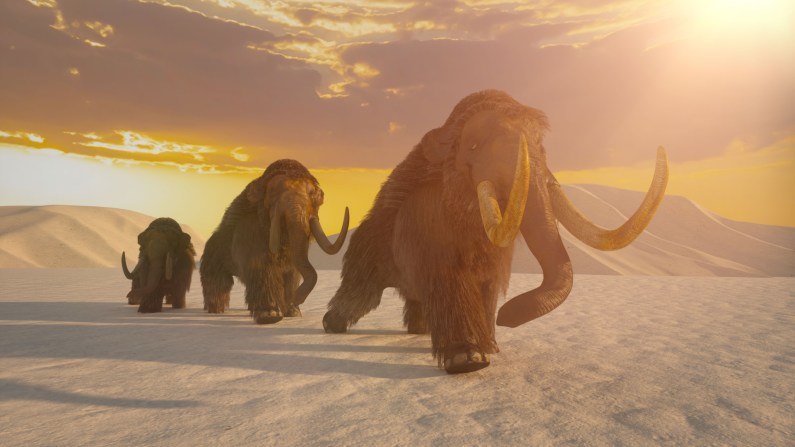
The woolly mammoth is the most ambitious project. Rather than attempting to clone a mammoth from frozen tissue (which is unlikely to be possible), scientists are editing the genome of the Asian elephant, introducing genes responsible for a shaggy coat, a layer of subcutaneous fat, and other adaptations to cold climates. The company promises to unveil the first mammoth calves by 2028.
The thylacine (Tasmanian tiger) — a marsupial predator that went extinct in the 20th century. In 2022, Colossal announced its program for its return, and recently reported the complete sequencing of its genome.
The dodo — a flightless bird from Mauritius, wiped out by humans in the 17th century. For its recreation, scientists are working with primordial germ cells from the pigeon — the dodo's closest living relative.
The South Island giant moa — a giant flightless bird from New Zealand that went extinct around 500 years ago. This project became the fifth in the company's portfolio.
Technologies Saving the Present
Alongside its high-profile de-extinction projects, Colossal is developing technologies that can already help endangered species today.
Concurrent with the announcement of the dire wolves' birth, the company reported the successful cloning of four red wolves — one of the rarest subspecies in the world. Fewer than 20 individuals remain in the wild, and the population has faced a critical genetic bottleneck. The cloned animals, derived from three distinct ancestral lineages, could increase the genetic diversity of the population by 25%.
The non-invasive cloning technology using blood cells, developed for the dire wolf project, can now be applied to preserve other endangered species without the need for surgical intervention.
An Ethical Dilemma
Even if it is technically possible to "create" an animal resembling an extinct species, the question remains: should we?
Christopher Preston, professor of ethics at the University of Montana, notes that Colossal approaches the issue responsibly: "They have demonstrated a serious commitment to animal welfare, with a certified humane facility and careful genetic screening to prevent harmful mutations."
But a deeper ethical problem is that de-extinction could create a dangerous illusion. "Extinction is still forever," emphasizes Dr. Rawlence. "If extinction doesn't exist, how will we learn from our mistakes? Will we get the message that we can destroy habitats because we can just bring everything back later?"
Other experts raise a more pragmatic question: why spend hundreds of millions of dollars resurrecting species that vanished long ago, when over a million modern species are currently threatened with extinction?
Ben Lamm, CEO of Colossal, responds: "I don't mind the Jurassic Park comparisons — we hear them all the time. That movie taught an enormous number of people, including non-scientists, that there is such a thing as DNA, and that people can now change it. Yes, in the movie everything goes horribly wrong, because it's a dystopia about hubris. But ultimately, it did more good than harm."
The Future That Has Already Arrived
Today, Romulus, Remus, and Khaleesi are healthy puppies growing up on protected land. They behave like ordinary wolves: they avoid humans, even those who have raised them since birth, and exhibit behavior typical of wild canids.
From a scientific standpoint, this is undoubtedly an achievement: 20 precise genetic edits across 14 genes represent a record number for a living vertebrate created through genetic engineering.
But whether these puppies are "resurrected" dire wolves or simply genetically modified gray wolves with a few "ancient" traits depends on how one defines the concept of "species" itself. And this philosophical debate will likely continue long after these wolves have grown to their full size.
One thing is certain: the boundary between extinction and existence has become thinner than ever before. And while this may not be science fiction in its purest form, perhaps we have taken one step closer to a world where the past is no longer irretrievable.
Share this with your friends!



 10
10
Be the first to comment
Please log in to comment