



In July 2025, a long-awaited event took place in the laboratory of the British Antarctic Survey (BAS) in Cambridge — an event climate scientists had been anticipating for nearly two decades.
From specialized freezers, where the temperature is maintained at minus 23 degrees Celsius, a batch of ice cores retrieved from East Antarctica was extracted. These cylindrical ice samples, raised from a depth of 2,800 meters, contain air bubbles trapped in icy captivity 1.5 million years ago.
To grasp the scale of this achievement, it suffices to recall that the previous record for a continuous ice archive, obtained as part of the European Project for Ice Coring in Antarctica (EPICA) in the early 2000s, covered only the last 800,000 years of Earth’s history. The new core from the Beyond EPICA — Oldest Ice project is nearly twice as old.
But age alone is not the goal. What interests scientists is not merely the number on the sample label. Their primary objective is to unravel one of climatology’s most complex puzzles: why, approximately one million years ago, Earth’s climatic metronome suddenly changed its rhythm.
A New Record
Until recently, the EPICA project core, extracted in the early 2000s, was considered the planet’s oldest continuous ice archive. It spanned 800,000 years of Earth’s history.
The new sample, extracted as part of the Beyond EPICA — Oldest Ice project, reaches 1.5 million years into the past. To reach this ice, an international team of scientists from 10 European countries had to drill a borehole 2,800 meters deep at Little Dome C in East Antarctica. This site is located at an altitude of 3,200 meters above sea level, approximately 40 kilometers from the Franco-Italian Concordia Station. Here, the ice lies in layers, like the pages of a giant book, and each page represents the frozen atmosphere of a distant past.
Why This Matters: The Mystery of the Broken Metronome
What interests scientists is not just the age of the ice. They are captivated by a riddle that has remained unsolved for several decades.
Approximately 900,000 to 1.2 million years ago, something strange happened to Earth’s climate. Before that time, glacial cycles ran like clockwork: every 41,000 years, the planet would enter a new ice age, followed by a warming period. Then, the rhythm suddenly changed. The period between glacial epochs increased to 100,000 years. And we still live in this new rhythm today.
"Something happened about 900,000 years ago," explained Dr. Catherine Ritz from the Institute of Geosciences in Grenoble, speaking at the project’s outset. "The duration of the glacial-interglacial cycle increased from 40,000 to 100,000 years, and we do not know why this happened."
This event is called the Mid-Pleistocene Transition. And it remains one of climatology’s greatest mysteries. Scientists know the changes are related to Earth’s orbit — the Milankovitch cycles, as they are called, influence the amount of solar energy reaching the planet. But that is not enough. And the prime suspect is carbon dioxide.
"We know what happened to temperature from marine sediments," explained Professor Olaf Eisen from the Alfred Wegener Institute for Polar and Marine Research, coordinator of the Beyond EPICA project. "But we do not know what happened to the atmosphere. And that is what the ice cores should give us."
How to Read the Ice Book
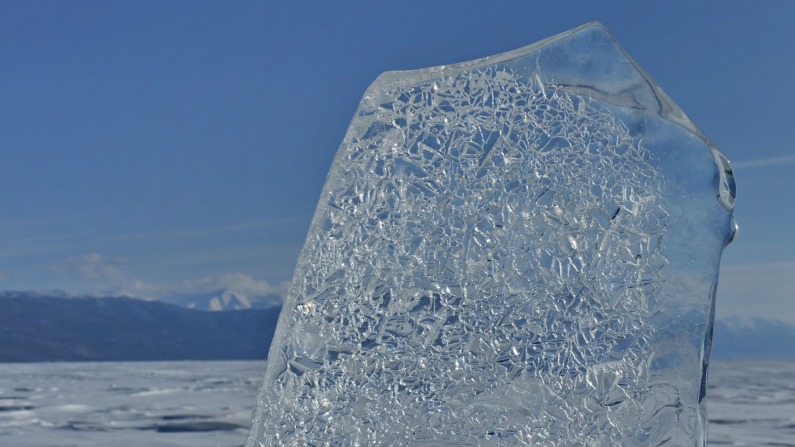
Ice cores are, essentially, time machines. When snow falls and gradually compresses into ice, it traps air bubbles. These bubbles are pristine capsules of the ancient atmosphere. They preserve the precise composition of gases: how much carbon dioxide there was, how much methane, how much nitrous oxide.
But that is not all. The ice itself holds information about temperature. The hydrogen and oxygen atoms in water molecules come in different forms — heavy and light (isotopes). Their ratio depends on how warm the planet was at the moment the snowflake formed. This allows scientists to reconstruct temperature with remarkable accuracy.
"Ice cores are a unique material for the geosciences, as they serve as a true archive of the paleoatmosphere," emphasizes Olaf Eisen.
Now, for the first time, researchers will have the opportunity to compare direct data on temperature and greenhouse gas concentrations over the period encompassing this mysterious transition. Will they be able to see how CO₂ levels changed at the moment the climate shifted from a 40,000-year cycle to a 100,000-year cycle? The answer to this question could fundamentally alter our understanding of how the climate system works.
A Technical Feat at the Edge of the Earth
To obtain these samples, a team of approximately 30 people had to work in extreme conditions, with temperatures as low as minus 35 degrees Celsius. The drilling rig was located at Little Dome C — a site chosen after thorough radar surveys conducted as early as the 2016–2017 seasons.
Choosing the location is a scientific challenge in itself. One must find a section of the ice sheet where layers are undisturbed, where the ice lies flat, and where its deepest horizons have not been melted by geothermal heat from below. Drilling to a depth of nearly three kilometers is a process demanding jeweler-like precision. If you drill too quickly and aggressively, the core can crumble into small pieces, making analysis very difficult, and sometimes impossible. But if you drill too slowly, you may miss your targets. Another drilling season might then be needed to reach bedrock and the oldest ice.
A total of 190 fragments were extracted, each about one meter long. They are currently stored at minus 23 degrees Celsius in specialized freezers at BAS in Cambridge. Dr. Liz Thomas, head of the BAS Ice Core Group, clarifies: "This is the most precious sample. We hope the record will cover at least 1.2 million years; we hope for 1.5, but in fact, it might turn out to be even more."
What’s Next? The Slow Thawing of History
The analysis of the cores will take several months, but this is really just the beginning. Researchers will use the continuous flow analysis method: the ice will be melted extremely slowly, millimeter by millimeter, while simultaneously measuring chemical elements, particles, and isotopes. Each centimeter of ice represents decades or even hundreds of years of history.
"Our data will allow us to produce the first continuous reconstructions of key environmental indicators — including atmospheric temperature, wind direction, sea ice extent, and ocean productivity — over the last 1.5 million years," says Dr. Liz Thomas.
The British team was selected for the leading role in analyzing impurities due to its expertise and the support of UK Research and Innovation.
What Other Obstacles Lie Ahead?
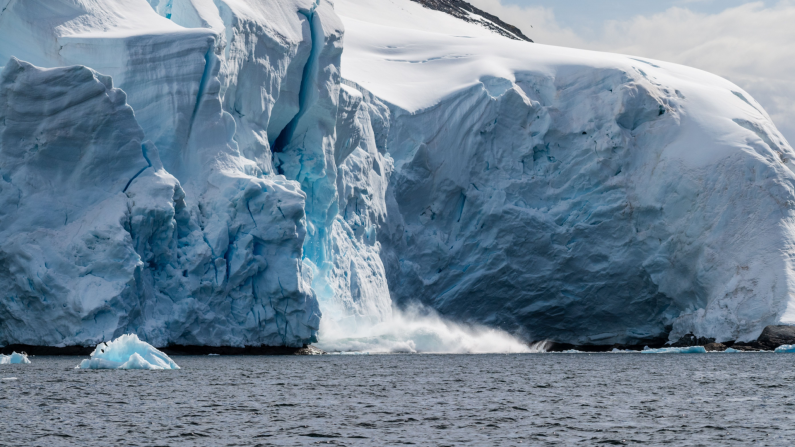
Of course, things are not so simple. Even once the ice is extracted, scientists face fundamental problems of interpretation. Firstly, the deeper the ice, the more compressed it is. The oldest layers may be so thin that annual layers cannot be distinguished. This reduces the temporal resolution of the record.
Secondly, there is the question of the origin of the oldest ice. Modeling conducted by a team of researchers led by Ailsa Chang showed that the deepest layers at Little Dome C may not be continuous deposited ice, but rather so-called "stagnant ice" — a layer that does not move with the glacial flow. In such a layer, the chronology can be disturbed. Scientists estimate that the thickness of this basal layer could be 200–250 meters. This means that the oldest samples may not be in the ideal chronological order that researchers so desperately need.
Nevertheless, even with these caveats, the Beyond EPICA project promises to deliver something unprecedented: direct, continuous data on the state of the atmosphere during the era when Earth’s climate underwent a fundamental restructuring.
Why Do We Need to Know About What Happened 1.5 Million Years Ago?
What relevance does the climate of the distant past have to our lives today? It has direct relevance. Here is why.
Today, the concentration of greenhouse gases in the atmosphere is higher than at any point in the last 800,000 years — and possibly in the last several million years. We are moving into uncharted territory. To understand how the climate will behave in response to this unprecedented experiment, we need models. And for models to be accurate, they must correctly reproduce the past.
Liz Thomas explains: "We want to understand how the climate will change in the future, and essentially, the more information we can provide about how the climate changed in the past, the better our predictions will be."
Understanding the mechanism that, 900,000 years ago, switched the climatic metronome from 41,000 years to 100,000 years is not merely a matter of satisfying academic curiosity. It is the key to understanding how strongly and how quickly the climate system can respond to external forcings. It is a test of our models against the most severe examiner of all: the real history of Earth.
As the authors of one of the key documents defining the project’s scientific program write: "Climate scientists have an obligation to provide realistic assessments of how the climate will change in the future. This requires accurate models of how the Earth’s climate system works and how it responds to changes. This, in turn, requires an understanding of all the processes that can occur and how they interact. This knowledge comes only from studying the past."
The Ice Legacy
Currently, 190 meters of the most ancient ice strata reside in European laboratories. In the coming years, scientists will essentially dismantle them molecule by molecule to reconstruct the planet’s history.
Each air bubble released from its icy prison will tell its own story. About how much carbon dioxide was in the atmosphere when our distant ancestors were just learning to walk on two feet. About how temperature changed as glaciers advanced and retreated. About how the planet survived one of the most enigmatic climatic transformations in its history.
"There is no other place on Earth where such a long record of the past atmosphere is preserved as in Antarctica," says Liz Thomas. "It is our best hope to understand the fundamental drivers of Earth’s climate changes."
And, perhaps, to understand where we are heading now.
Share this with your friends!

Evan Mcbride



 10
10
Be the first to comment
Please log in to comment