



In reality, the technological threshold that separated consumer robotics from mass-market status has long been crossed. Just a few years ago, robot vacuum cleaners were seen as the pinnacle of automation, whereas today, humanoid AI-powered assistants are already being actively deployed.
In 2025, the global market for consumer and personal service robots is valued at $15-17 billion with annual growth exceeding 25%, making it the fastest-growing segment of robotics. Let's examine how this market has changed, what practical tasks modern robot models solve, and what technological, economic, and social barriers remain before their widespread adoption.
Market Landscape
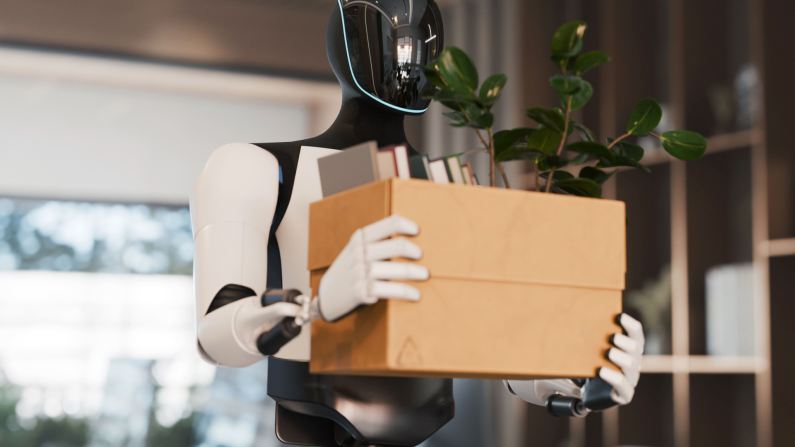
The home and personal robot market in 2025 is strikingly diverse. It can be broadly divided into several rapidly growing segments, each solving its own tasks and addressing different needs.
One segment, the most widespread and commercially successful, is functional helpers. This includes:
-
Robot vacuum cleaners. Flagship models like the Roborock S8 Pro Ultra or Ecovacs Deebot X2 Omni are now fully autonomous stations. They not only clean but also autonomously drain dirty water, refill clean water, and dry and clean their mops and containers. Their navigation is based on Simultaneous Localization and Mapping (SLAM) technology. This enables the creation of precise apartment maps, recognition of floor types (carpet, tile, hardwood), and even the identification of individual rooms. The AI object recognition feature allows them to avoid not only walls but also scattered socks, cables, and children's toys—a serious problem just a couple of years ago.
-
Window-washing robots. For example, the HOBOT-298 or Ecovacs Winbot W1. Using vacuum mounts or a magnetic system, these devices autonomously move across a window, spray a cleaning solution, and wipe the surface. They tackle one of the most hated and dangerous household chores, especially in multi-story apartment buildings.
-
Robot lawn mowers. Leaders like the Husqvarna Automower or Robomow RX have long become a familiar sight in the landscapes of suburban homes in Europe and the USA. They operate within a set perimeter and maintain a perfectly even lawn without human intervention.
Another segment is mobile platforms and companions. These robots perform less heavy physical labor and expand our capabilities:
-
Telepresence and monitoring. Robots like the Double 3 (by Double Robotics) or Temi. These are essentially mobile stands with a tablet, camera, and navigation system. They enable remote presence at home: moving from room to room, communicating with family members, and watching over children or elderly relatives. During the pandemic, they were used to "visit" patients in isolation wards; now they are applied in hybrid work formats, allowing someone working "remotely" to physically move around the office.
-
Companion robots. This is one of the fastest-growing classes. The EBO Air 2 (Enabot) is a compact robot-"ball" with a camera that can move around the home, play with pets, and provide video communication. More complex models, such as Lovot (by Groove X, Japan), have no utilitarian functions. Their goal is to evoke an emotional response. Equipped with numerous sensors (temperature, touch) and expressive "eyes," they respond to affection, recognize their owner, follow them, and "ask" for attention like pets. Ultimately, this helps reduce stress and feelings of loneliness.
The third segment is humanoid assistants and robot dogs. This is where the most revolutionary changes are happening:
-
Robot dogs. Boston Dynamics' Spot is positioned as an industrial robot for inspections at hazardous sites (energy, construction), but it is increasingly being leased or purchased for research purposes and even for guarding private property. Spot can patrol an area along a set route, collect data from sensors, and navigate complex terrain (stairs, piles of construction materials). More affordable analogues, such as the Unitree Go2 or Xiaomi CyberDog, offer similar, though less advanced, capabilities.
-
Humanoid home assistants. For example, 1X Technologies (formerly Halodi Robotics), with its robot EVE and now NEO, develops androids safe for interaction with people in domestic environments. Their key feature is force control with feedback and soft materials, making physical contact with such a robot safe. Another example is Figure AI, which, in collaboration with BMW, is testing its human-like robot, Figure 01, on automotive assembly lines to refine algorithms for future home use. Their stated goal is to create a robot capable of performing "dull, dirty, and dangerous" tasks, including at home.
Functions now considered basic include autonomous adaptation in a familiar environment, charging at a docking station, performing simple cyclical tasks (e.g., scheduled cleaning), voice control via Alexa/Google Assistant integration, and remote monitoring via an app.
More advanced robots can perform various object manipulations—for instance, not just avoiding a chair as an obstacle but cleaning under it, wiping a table without touching the laptop on it, or picking up a cup, distinguishing it from a plate. Many robots are already being taught to be proactive and anticipate. For example, a robot vacuum, seeing you come home on a rainy day, might suggest launching an enhanced cleaning mode in the hallway. A companion, noticing that an elderly person hasn't moved for a long time, might gently check if everything is alright and send a notification to relatives.
Why Robots Are Getting Smarter
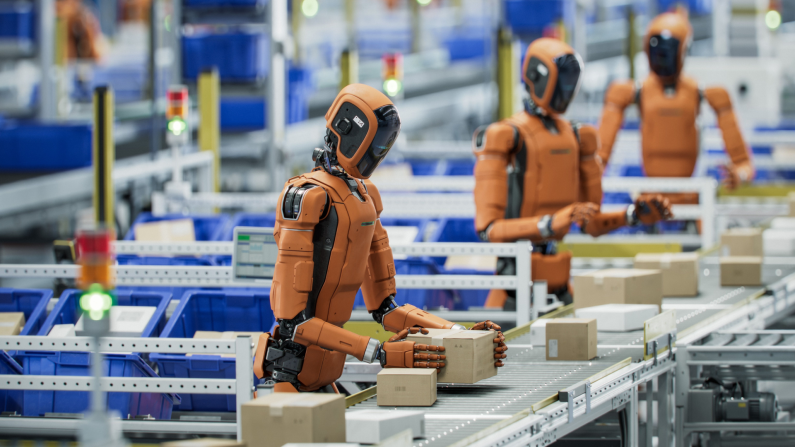
The sharp leap in the capabilities of home robots over the last 2-3 years is due to the convergence of several key technologies.
AI Navigation
Early SLAM systems created only a geometric map—a set of obstacles and free space. Modern systems, like NeRF (Neural Radiance Fields) and its derivatives, go further. They create a semantic 3D model of the environment. The robot now "understands" that this rectangular object is a "sofa"—it's soft, and you can climb on it (if you're Spot), while this tall object with doors is a "cupboard"—it's hard and must be circumvented. This is achieved through neural network-based computer vision algorithms (e.g., architectures such as Vision Transformer), which classify objects in real time. NVIDIA, with its Isaac Sim platform and NVIDIA Isaac ROS toolset, provides developers with precisely these capabilities, allowing them to train and test robots in highly realistic simulators before real-world deployment.
The breakthrough is linked to the development of soft robotic grippers and tactile sensors. Companies like Soft Robotics (with their mGrip technology) create grippers made of silicone that, like tentacles, envelop an object without breaking or scratching it. Ideal for picking fruit or handling fragile packaging.
Learning from Video and Imitation Learning
Now robots are increasingly trained using imitation learning and its more advanced version—reinforcement learning based on human feedback.
For instance, robots learn from YouTube. Research groups (e.g., from Carnegie Mellon University and Google DeepMind in the RT-2 project) "feed" a neural network model millions of hours of video showing people performing everyday actions. The model identifies patterns: to pour water into a glass, you need to take a bottle, bring it to the glass, and tilt it. This "knowledge model" is then transferred to a robot, which, through trial and error in a simulator and later in reality, learns to reproduce these actions. The OpenAI project (in collaboration with 1X) is also actively working in this direction.
One-shot or Few-shot learning technologies enable a robot to adapt to a user's specific needs. An owner can physically guide the robot's manipulator, showing exactly how they want laundry folded or dishes arranged in a specific dishwasher. The robot remembers the trajectory and context.
Real-World Cases: Robots in Service
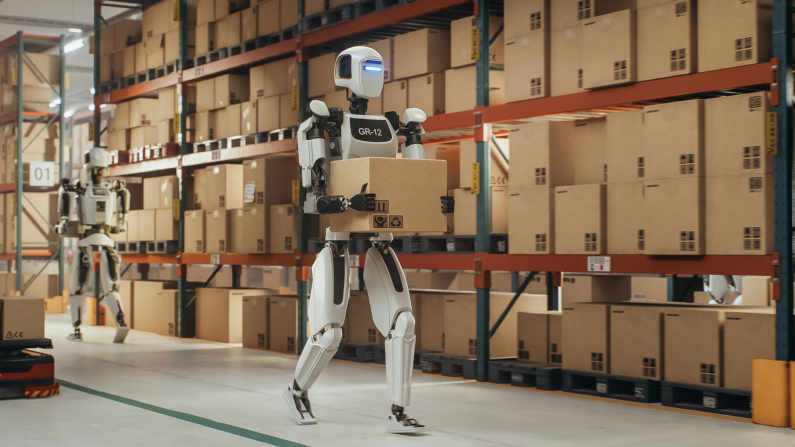
Warehouses and Logistics
Here, home technologies meet industrial scale. Locus Robotics—these are robot "pickers" (wheeled stations with compartments) that move around the warehouses of giants like Boots UK or DHL. A worker stands in place, and robots with goods for order fulfillment drive up to them one by one. This increases productivity by 200-300% and reduces staff workload.
Boston Dynamics Stretch—this heavy-duty robot sees the world through lidar and cameras, autonomously finds pallets with boxes, and, using a powerful vacuum gripper, unloads them at speeds of up to 800 boxes per hour. It handles monotonous, injury-prone work for humans.
Agriculture: Robotic Agronomists
Tortuga AgTech—their robotic manipulators on rails in greenhouses autonomously determine the ripeness of fruits (e.g., strawberries) using computer vision and carefully pick them with soft grippers without damage.
FarmWise—robots on caterpillar tracks, equipped with AI cameras, weed crop beds in fields. They distinguish between cultivated plants and weeds and precisely remove the latter with a mechanical blade, reducing herbicide use by 90%. Such systems are already operating on farms in California.
Home and Social Sphere: Routine and Emotional Assistance
- Dusty Robotics—their FieldPrinter robot autonomously marks out the plan for future walls and utilities on a construction site based on digital blueprints, replacing a week's work for two people with extensive equipment.
- Use of Spot—beyond inspections, Spot, equipped with a manipulator, is being trialed in senior homes in Japan for tasks such as picking up a fallen item.
- Emotional companions in medicine—the robotic seal Paro, certified as a medical device in the USA and EU, is used in therapy for patients with dementia and Alzheimer's disease. Its reaction to touch and sounds reduces anxiety and aggression.
Why Robots Have Become More Affordable
The decreasing cost of key components is the main economic driver of the market.
-
Lithium-ion batteries. Mass production for electric vehicles (Tesla, BYD) and consumer electronics led to an 89% drop in the cost per kilowatt-hour of capacity from 2010 to 2023. More energy-dense, compact, and safe batteries mean longer operating times for home robots (now 2-3 hours instead of 1) and the ability to equip them with more powerful, yet energy-intensive, processors.
-
Electric motors and actuators. The widespread adoption of Brushless DC (BLDC) motors and stepper motors, previously used in the precision industry, has made them mass-produced and cheap. They provide precise, smooth, and quiet movement for manipulators and wheels, which is critical for the home.
-
Sensors. Lidars, which cost tens of thousands of dollars in the 2010s (like those on the first autonomous vehicles), now, in the form of solid-state single-beam or small multi-beam models for robots, cost between $100 and $1,000. High-resolution cameras, gyroscopes, accelerometers—all are components from the smartphone world, whose production has been perfected.
-
Computational platforms. Specialized chips for AI inference (that is, the process where a trained AI model uses its knowledge to process new data and generate predictions or decisions), such as the NVIDIA Jetson Orin series or analogues from Qualcomm, provide immense computational power for real-time sensor data processing in a form factor that fits inside a robot's body without bankrupting the manufacturer.
The Ethics of Human-Robot Coexistence
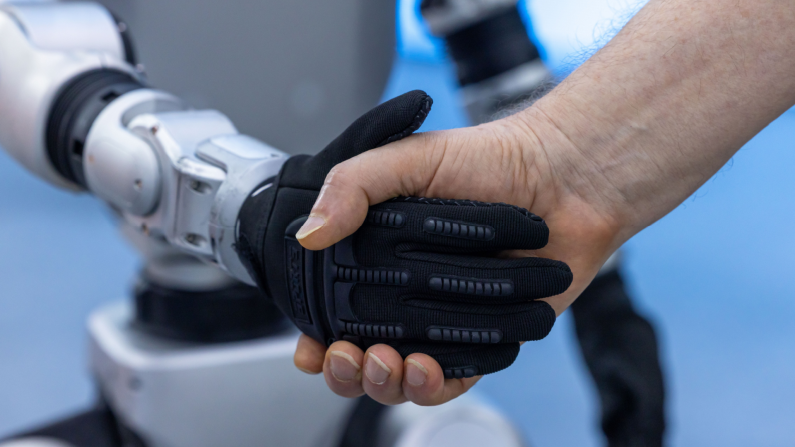
The introduction of robots, especially into homes, raises acute questions that society and regulators will have to address in the coming years.
Robots are indeed replacing routine, low-skilled physical labor. A McKinsey Global Institute study forecasts that by 2030, up to 30% of working hours in the global economy could be automated. This will first affect professions involving predictable physical work: assembly line workers, warehouse staff, and cleaners.
Nevertheless, the history of technology shows that automation creates more jobs than it destroys, but they require different skills. New professions will emerge: robotics service technician, AI trainer for robots, and human-robot interaction (HRI) specialist. The key task is to implement large-scale retraining programs and adapt the education system.
But ensuring safe coexistence with a machine is the most pressing technical and legal question. A robot must not cause harm to humans, animals, or property. To this end, standards like ISO "Robots and robotic devices — Safety requirements for personal care robots" are being implemented. They impose requirements such as limiting force and speed: upon collision with a human, actuators must shut down instantly, and grip force and movement speed must be limited to minimize injury.
Furthermore, a robot with cameras and microphones connected to the internet is a potential "bug" or tool for hacking a home network. Manufacturers are obliged to ensure end-to-end data encryption, to implement regular security updates, and to provide clear privacy settings.
Thus, home robots are the result of a gradual yet rapid integration of technologies into the fabric of our daily lives. The technological barrier has been overcome, and the economic one is quickly lowering. Now the main battles are unfolding not in laboratories but on three fronts: user trust (convenience and safety), legislative clarity (standards and liability), and ethical principles. A future where a robot is as mundane an element of the home ecosystem as a refrigerator or smartphone is already on the horizon. Today, it is being shaped by the choices of engineers, the decisions of regulators, and our calm and conscious acceptance as consumers of these new "neighbors."
Share this with your friends!

Ethan Oakes

 10
10
Be the first to comment
Please log in to comment