



Space has long ceased to be a territory accessible only to superpowers and large space agencies — and this has been the case for quite some time.
By 2026, we have effectively approached a new space era: the private sector has become a key driver of scientific and technological development, and solutions that only yesterday looked like pure science fiction are gradually becoming a working reality. And this is no longer just about launching satellites or suborbital flights.
Today, private companies are developing entire industries — from space tourism to satellite internet networks for everyday users and even the first commercial projects related to the Moon. “Lunar tourism” still sounds like a bold concept, but the direction already exists. Have you ever dreamed of spending a weekend beyond Earth? Judging by the pace of industry development, this idea no longer looks hopelessly fantastical.
A new wave of space commercialization is being fueled by startups developing technologies that make space accessible not only to wealthy states and large corporations, but also to businesses — and, in the future, to ordinary people. New types of satellites, reusable rockets, and projects for extracting resources on other celestial bodies increasingly make it clear: humanity is indeed approaching the status of a spacefaring civilization. Before looking too far ahead, let’s take a closer look at several of the brightest and most ambitious companies that are changing the rules of the game right at this very moment!
SpaceX — the leader of space commercialization
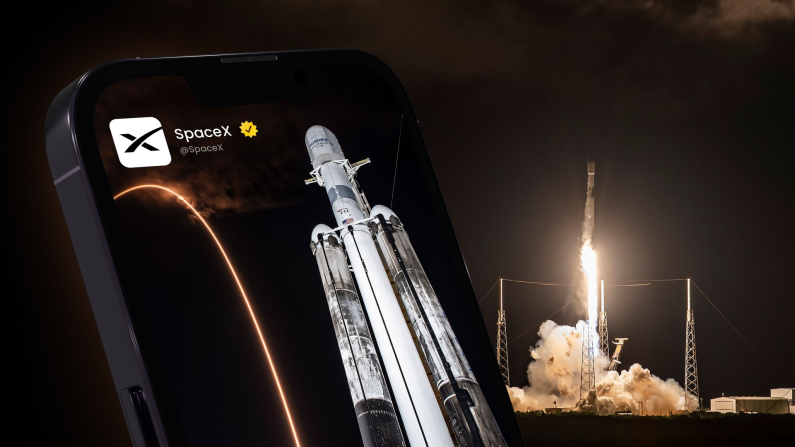
Elon Musk’s company SpaceX is, without a doubt, one of the main pioneers of the modern space business. In 2026, it still remains at the forefront of the development of reusable rockets and technologies for deep-space missions. One of the company’s key projects is the Starship rocket, which in the future is expected to become the foundation for flights to the Moon and Mars.
SpaceX continues to conduct Starship tests while simultaneously refining the platform itself. This includes increasing payload capacity, improving safety systems, and preparing the rocket for operation in deep-space conditions. In the long term, Starship could radically change the economics of space launches.
In addition to rockets, SpaceX is actively developing the Starlink satellite network. The project aims to provide high-speed internet access to users around the world, including the most remote regions. Today, Starlink already operates where traditional communication is either unstable or completely absent, and it continues to expand its orbital constellation, moving toward full global coverage.
Planet Labs — next-generation satellite reconnaissance
Planet Labs has long secured its status as one of the leaders in Earth observation via satellites. The company uses compact satellites — approximately the size of a microwave oven — that regularly collect high-resolution images of the planet’s surface. This data is applied across a wide range of fields: from environmental and climate change monitoring to disaster impact analysis and assessment of agricultural conditions. At present, Planet Labs continues to expand its orbital network, increasing the frequency of image updates.
Particular attention should be paid to the company’s approach to analytics. Planet Labs does not limit itself to providing images, but actively works with data processing, turning satellite imagery into a tool for scientific research and business decision-making.
Rocket Lab — the startup that made rocket launches accessible
Rocket Lab is one of the startups that has significantly simplified access to space. The company developed the small Electron rocket, designed to place small satellites into orbit. Today, Rocket Lab continues to increase its launch cadence, largely due to competitive pricing and short preparation timelines. For startups and research teams, this means the ability to launch their spacecraft into orbit without years of waiting and enormous budgets.
At the same time, the company is also working on a heavier launch vehicle — the Neutron rocket, which is designed to carry larger payloads and, in the future, could be used for crewed missions.
Blue Origin — from suborbital flights to colonization

Blue Origin, the company founded by Jeff Bezos, is less public than SpaceX, but nonetheless occupies an important place in the space market. In 2026, it continues to develop the New Shepard rocket for suborbital flights, including within the framework of space tourism.
At the same time, Blue Origin is not limited to suborbital missions and is actively working on the reusable heavy-lift rocket New Glenn. It is designed to deliver large payloads into orbit and can be used for deep-space missions. The company also invests in long-term projects related to the exploration of the Moon and Mars. This includes the creation of orbital stations and intermediate bases that, in the future, could become part of a sustainable space infrastructure.
Astroscale — solving the space debris problem
Astroscale is addressing one of the most pressing problems of modern spaceflight — space debris. Decommissioned satellites, rocket fragments, and other objects in orbit pose a serious threat to operational spacecraft.
In 2025, the company had already conducted tests of technologies for capturing and removing such objects from orbit. This involves the use of specialized robotic systems capable of safely deorbiting debris into the atmosphere. Solving this problem is critically important for the further development of space launches.
Lunar Resources — resource extraction on the Moon
Lunar Resources is developing technologies for extracting water and rare metals on the Moon. These resources are considered key to supporting future lunar bases and interplanetary missions. Water can be used not only for life support, but also for fuel production, reducing dependence on supplies from Earth. The extraction of metals, in turn, will make it possible to create infrastructure elements directly on the Moon.
Not in orbit yet, but almost!

Despite the fact that some projects have not yet reached the stage of full-scale implementation, they are already in the final stages of preparation. One such project is Axiom Space, which is developing a private orbital station capable of competing with the ISS in the future.
The company is already negotiating with international partners and plans to launch the station in the coming years. This format could significantly change the approach to space exploration and open up new opportunities for private missions.
Projects for building lunar hotels are also being discussed. The Moon Village Association, which brings together several companies, is working on concepts for living on the Moon and on materials capable of withstanding extreme conditions — temperature fluctuations and radiation. Although real hotels are still far off, preparatory work is already underway.
Trends in space commercialization: what lies ahead?
Space tourism remains one of the most discussed topics of recent years. Despite the high cost of tickets, by 2025 suborbital flights are becoming a reality not only for billionaires. Companies such as Virgin Galactic and Blue Origin continue to develop their programs, offering passengers the opportunity to see Earth from above and experience weightlessness. Over the next 10–15 years, this market could grow to multi-billion-dollar scale. SpaceX’s plans for flights around the Moon only reinforce this trend.
Internet for everyone is another key direction. With the development of satellite networks such as Starlink and OneWeb, high-speed internet is becoming available in the most remote corners of the planet. This opens up new opportunities for education, medicine, and business and may lead to serious changes in the telecommunications market.
Autonomous missions and artificial intelligence are becoming an integral part of space exploration. AI is already used to control satellites, spacecraft, and to process massive volumes of data. In the future, autonomous systems could make missions to Mars and other planets more efficient and safer.
The lunar and Martian industries are gradually moving out of the realm of theory. Startups such as Lunar Resources and Astrobotic are working on technologies for extracting water and rare metals, as well as on creating infrastructure for resource processing directly beyond Earth. This reduces dependence on supplies from our planet and makes long-term human presence in space more realistic.
All of this indicates that space commercialization is reaching a new level. In the coming years, space is ceasing to be exclusively a domain for science and strategic objectives and is increasingly turning into an economically significant environment where private companies are shaping new markets and technologies.
Share this with your friends!

Ethan Oakes



 10
10
Be the first to comment
Please log in to comment