



Just a couple of years ago, artificial intelligence was mainly associated with chatbots, smart speakers, and experimental demos from tech expos. The year 2026 has only just begun, yet it already marks a major shift: AI has stepped beyond the smartphone screen and started to inhabit the physical space around people — the home, the desk, the kitchen, and even such areas of life as personal communication and… romance!
New AI devices are increasingly focused not on abstract “process optimization,” but on everyday scenarios: household assistance, emotional support, task organization, entertainment, and a sense of presence for those who, for one reason or another, feel lonely. These are no longer just algorithms that answer questions, but products capable of adapting to users, remembering their habits, and becoming as much a part of daily life and hobbies as, say, reading or going to a bar with friends.
We have collected six consumer AI innovations that are either already entering the market or are in the final stages of launch and about to be released. Yes, some of them may be controversial — but they are still useful and intriguing nonetheless!
Razer Project AVA — a holographic AI companion on your desk
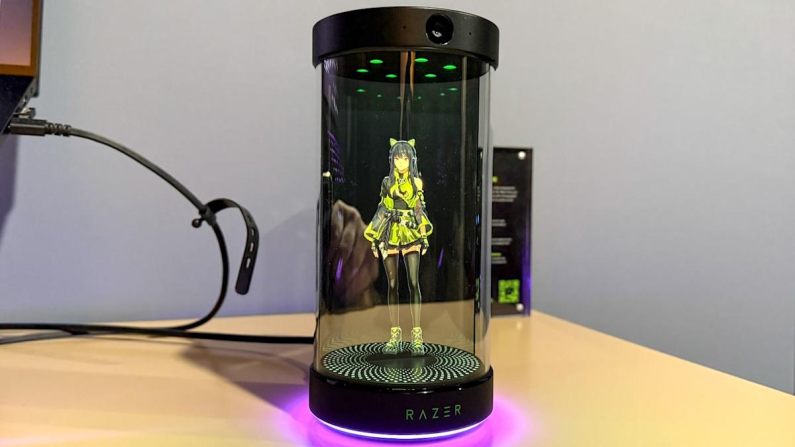
At the annual consumer electronics exhibition CES 2026, Razer unveiled Project AVA — not just a voice assistant or an app, but a full-fledged AI helper in the form of a holographic avatar that literally “lives” on your desk as a 5.5-inch image inside a special transparent capsule. AVA can take on the appearance of multiple characters — from an anime waifu named Kira to a muscular Zane. All of them move naturally, blink in sync, move their lips, and orient themselves in space thanks to built-in cameras and microphones. This is no longer an abstract assistant on a screen, but someone who observes you and shares your everyday routine.
For example, AVA answers questions, gives tips for games you are playing (yes, it looks at the screen together with you!), helps with task planning, and even assists with work-related problems.
Technologically, AVA is built on adaptive AI and continues to develop ideas that emerged last year, but now the focus is on a wide range of everyday tasks. A preorder announcement was recently made with a deposit of around $20, and the full release is planned for the second half of 2026. If successful, AVA devices will likely appear on the shelves of regular consumer electronics stores as well. However, pricing is still difficult to predict — but it is unlikely to be cheap.
AIBI Pocket Pet — a pocket AI companion that is always with you

While some companies focus on stationary AI assistants for the home or desk, others are developing the opposite direction — miniature AI companions that can be carried in a jacket pocket. One of the most vivid and popular examples is AIBI Pocket Pet, a compact ChatGPT-based robot that fits almost anywhere and easily attaches to surfaces using magnets.
AIBI can recognize faces, respond to voice commands, hold conversations, remind you of tasks, show weather forecasts, and even sing, dance, and take photos of what’s happening around you. Most importantly, it gradually adapts to its owner: it remembers communication style, reactions, and preferences, which over time makes it feel less like a gadget and more like a personal digital companion. There is also an entire collection of cute and funny outfits available for it — from cat ears to a yellow raincoat!
The developers position AIBI not so much as a toy, but as an “everyday companion” — for travel, walks, commutes, and casual interaction. This format suits those who are tired of impersonal voice assistants and are looking for a more lively and personalized way to interact with AI, as well as children and teenagers. The robot also has competitors, such as Emo. Both are already freely available in most electronics stores and are quite affordable compared to the expected price of AVA.
Lovense Emily — an AI android with memory, emotions, and a personality of its own

One of the most discussed novelties at CES 2026 was Emily — an anthropomorphic AI android from Lovense, a company known primarily for its work in sex technology. Unlike traditional home assistants, Emily emphasizes максимально realistic interaction — from appearance and movement to dialogue and emotional response. Notably, there was no mention of erotic content; the android is positioned first and foremost as a device for emotional rather than physical closeness.
Emily is equipped with a silicone shell with a heating system, micro-servo motors for facial expressions and movement, and a set of sensors that allow her to respond to touch and track the gaze of her conversation partner. The AI model can remember details of conversations, adapt to the user’s personality, and gradually form a more stable “character.” Some data processing occurs locally, while more complex scenarios are handled in the cloud.
Lovense emphasizes that Emily is not just a technological experiment, but an attempt to create a judgment-free space for communication, where users can feel comfortable and safe. The first shipments are expected in 2027, but the waiting list is already open — interest in the project turned out to be significantly higher than the developers anticipated. And it’s not surprising — Emily looks like a real photo model.
Samsung Bespoke AI Refrigerator — a fridge that is both a stock manager and almost a chef
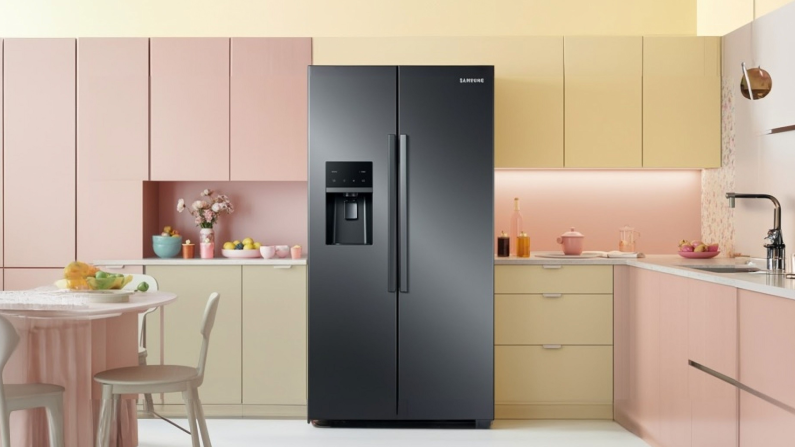
AI is increasingly penetrating everyday household appliances as well. One of the most illustrative examples is the updated Samsung Bespoke AI Refrigerator Family Hub, presented at CES 2026. The device is equipped with cameras and the AI Vision system, which recognizes food items, tracks expiration dates, and suggests what and when should be used. The refrigerator can recommend recipes, generate shopping lists, and take household habits into account — from dietary preferences to cooking frequency.
In effect, it is no longer just a place to store food, but a smart kitchen hub that helps plan daily life and save time. Samsung is betting that such devices will become unobtrusive yet useful assistants integrated into everyday rituals. According to Samsung, which showcased the AI Vision lineup at CES 2026, these refrigerators are expected to go on sale in the coming months, initially only in the United States, South Korea, and select European countries.
LG CLOiD — a robot assistant that takes care of your home for you
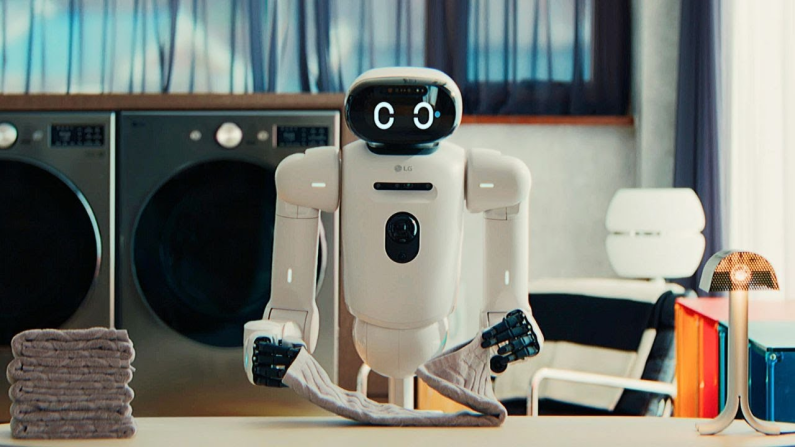
One of the most striking premieres at CES 2026 (yes, all the innovations we’ve listed come from there, as you may have noticed) was LG CLOiD — a representative of an entirely new class of home robots. While robots used to be limited to vacuuming floors or washing windows — no longer surprising anyone — CLOiD is a full-fledged home assistant with arms, eyes, and a head, capable not only of understanding voice commands but also of performing real household tasks. It embodies LG’s “Zero Labor Home” concept — a home where robots take over routine chores, freeing people’s time for what truly matters.
CLOiD looks like a short humanoid robot on wheels, with two articulated arms and five movable fingers on each hand, giving it remarkable dexterity. It can pick up objects, open cabinets, and even operate household appliances. The robot’s “brain” is a powerful chip located in its head, surrounded by cameras, sensors, a speaker, and a display. Using AI, it recognizes objects, analyzes scenarios, and decides on actions.
At CES 2026, LG demonstrated CLOiD in real-life scenarios: the robot takes food out of the refrigerator and puts it into the oven, starts a laundry cycle, folds dry clothes, and even interacts with other devices through the ThinQ system.
But CLOiD is not just about physical movement. The robot was designed with Human-AI Interaction in mind: it responds to voice, changes expressions on its “face” display, holds conversations, and learns from the user, adapting to their style. Thanks to integration with the LG ThinQ smart home ecosystem, it can act as a coordinator for all intelligent devices, simultaneously serving as a cook, laundry assistant, and household dispatcher. The exact commercial launch date and price have not yet been announced, but the CES 2026 demonstration marked its first major public appearance, and the industry is already calling CLOiD a potential future of household robotics.
All of these devices, no matter how different they may seem, share one important trend: artificial intelligence is increasingly entering everyday human life and transforming from entertainment into a full-fledged assistant and part of the physical world. AI is no longer just a feature — it now has a form, a character, and a permanent place in the home. Developments in mental support and personal communication are especially in demand — have you noticed that? This trend is somewhat unsettling, but nevertheless, we can’t wait to see where progress leads next. What about you?
Share this with your friends!

Evan Mcbride




 10
10
Be the first to comment
Please log in to comment