



The beauty industry has traditionally been considered one of the most “human-centered.” What matters here is not only the skilled hands of a professional, but also contact, trust, and a sense of care — something that, it would seem, only a living, real person can provide to a client.
All the more interesting, then, is to observe how this sphere is increasingly transforming under the pressure of AI and becoming a testing ground for automation. While robots are replacing people in factories and logistics, machines are appearing in beauty salons that perform manicures, analyze skin, wash hair, and even offer fully automated SPA procedures.
The question “can robots replace humans in beauty salons” no longer sounds like a futuristic fantasy today. Rather, it is a question of scale, boundaries, and which specific tasks clients and businesses are willing to hand over to machines. To understand where everything is heading, it is worth first looking at what already truly exists—not prototypes, but real, functioning salons and companies.
Robots and AI in Beauty Salons: Where a Robot Can Already Serve You Today
The most well-known and frequently cited example is the Clockwork manicure robot, created by a San Francisco startup. This was not an experimental installation, but a commercial product that operated for several years in U.S. shopping malls and office spaces. The client selected a nail polish color through an interface, placed a hand inside the device, and the robot applied the coating using computer vision and a mechanical arm. The entire procedure took about 10 minutes. Clockwork was positioned as a fast and affordable “on-the-go” service; however, the company faced the fact that clients expected not just nail coloring, but full care—cuticle work, shaping, and communication. As a result, the project became a vivid example of how automation works well for a narrow task but poorly replaces a comprehensive service.
Another illustrative case is robotic hair-washing systems that began appearing in Japan back in the 2010s. For example, Panasonic developed a robotic system capable of washing hair using numerous soft “fingers” equipped with pressure sensors. The machine analyzes the shape of the head and automatically selects the level of force. Such devices were tested in salons and medical facilities. Commercially, they did not gain widespread adoption in regular salons: clients noted the technical sophistication, but also the lack of the familiar “human touch.” However, in elderly care and patient care, these technologies proved to be in demand, as they reduce the physical burden on staff.
Another area is automated massage and SPA systems. Modern premium-class massage chairs have long used AI: they scan the body, determine height, weight, and tension zones, and adapt the massage program accordingly. In Japan and South Korea, such devices are installed not only in salons, but also in airports, offices, and medical centers. Formally, this is already a “robot,” but clients perceive it more as a high-tech tool than as a replacement for a live professional.
Real examples also include SPA capsules for washing and body care, which are closed cabins where a person lies down while the system automatically regulates water supply, jet pressure, and temperature. This technology has been discussed in international media as an innovation for automated hygiene and care. Experts, however, see its application primarily in healthcare, as it is an ideal option for people with disabilities or limb paralysis—a solution that ensures safety and comfort without the involvement of a live assistant.
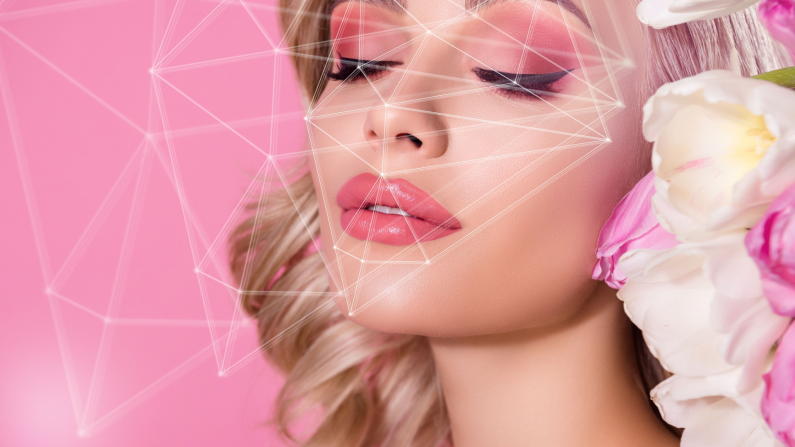
If we speak not about robots in the literal sense, but about AI, the beauty industry has advanced much further here. AI-based skin analysis systems are now used in many salons and cosmetic chains. Companies such as Perfect Corp and L’Oréal have developed technologies that use a camera and machine learning algorithms to analyze skin condition, identify wrinkles, pigmentation, dehydration, and recommend procedures or cosmetics. In salons, such systems often become the “first point of contact”: the client receives objective data, and the professional then interprets it and offers personalized care.
AI solutions for makeup selection and hair coloring work in a similar way. Virtual mirrors that show how a new hair color or eyebrow shape will look have already become commonplace in large salons and cosmetic chains. Formally, this is not a replacement for a professional, but it is precisely here that the machine takes on part of the expert function—and does so quickly, visually, and without human involvement.
As you may notice, in all these cases robots and AI almost never work “alone.” They either perform a narrow, standardized task or enhance human work rather than fully displacing it. What does this indicate?
What’s Next: Will Robots Really Be Able to Replace Beauty Professionals?
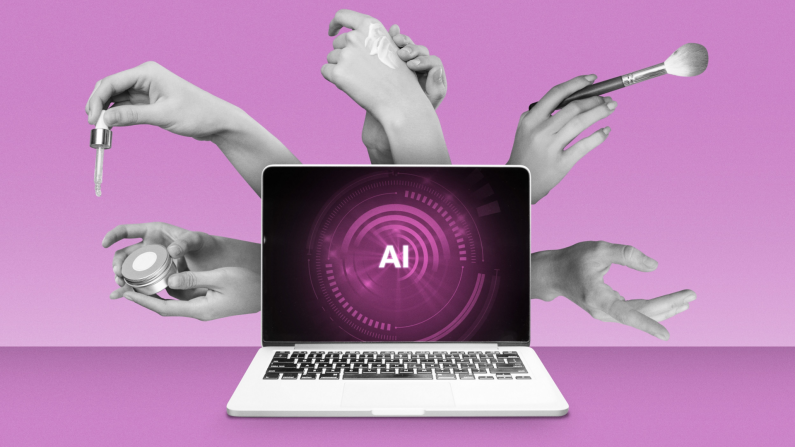
When forecasting the future, experts agree on one thing: a complete replacement of humans in beauty salons is unlikely. The reason lies not only in technological limitations, but also in the nature of the service itself. Beauty is not only about the result, but also about the process, where emotions, trust, and a subjective sense of comfort matter. A machine can perfectly apply nail polish or calculate water pressure, but it cannot sense a client’s tension, sustain a conversation, or intuitively adjust the process depending on mood.
At the same time, automation will continue to deepen precisely where speed, repeatability, and standards are important. For example, administration: why should a person stand at the reception desk, take phone calls, and manage bookings when a specialized automated system can do this? Manicure machines, AI-based skin diagnostics, and robotic systems for washing hair or bodies will also continue to develop—especially in the mass-market, wellness, and medical segments. Recent scientific research even demonstrates progress in creating robots capable of performing contact operations with hair—for example, carefully combing, gripping, and positioning individual strands. However, this is a challenging task for machines due to the softness and mobility of hair. Nevertheless, this direction represents an excellent way for businesses to reduce costs and scale services, and for clients—to obtain fast and predictable results.
Thus, most likely we will see a hybrid model in which robots take on routine and physically demanding tasks, while humans remain in the role of experts, communicators, and experience curators. The beauty professional of the future will work less with their hands and more with decision-making, interpreting AI data, and building a personalized approach for each client. Robots in beauty salons are not a “beautiful replacement,” but rather a beautiful form of support. They are already changing the industry, but not revolutionarily—gradually, leaving to humans what still cannot be reduced to algorithms: feeling, taste, and live presence.
Share this with your friends!
 10
10
Be the first to comment
Please log in to comment