


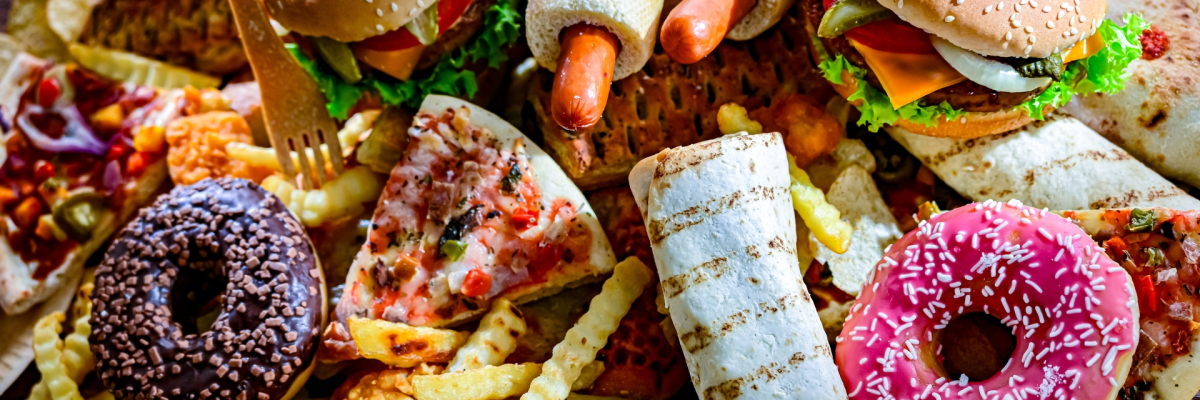
A plastic bottle, leftover corn stalks, and yeast are hardly the most obvious ingredients for a cookie.
Yet this is exactly the kind of raw material a team at Southern Illinois University Carbondale is trying to turn into food. On August 24, 2026, the researchers presented new results from the project at the American Chemical Society (ACS) conference in Chicago. And now the goal is no longer simply to obtain protein from waste. The scientists want to learn how to turn it into полноценные food ingredients — including flavorings and beneficial pigments.
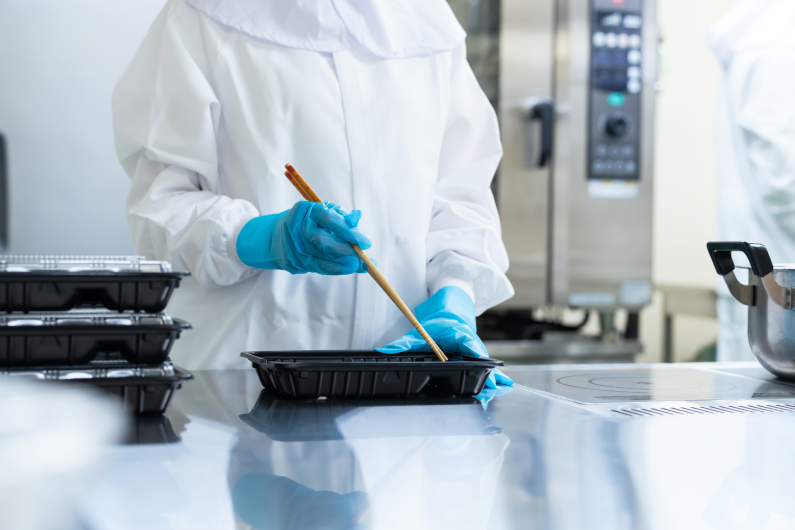
One of the project’s results looks particularly unusual: small protein snacks called µBites, which are printed using a food-grade 3D printer. Their base is produced with the help of microorganisms that process the products created when plastic and plant biomass are broken down.
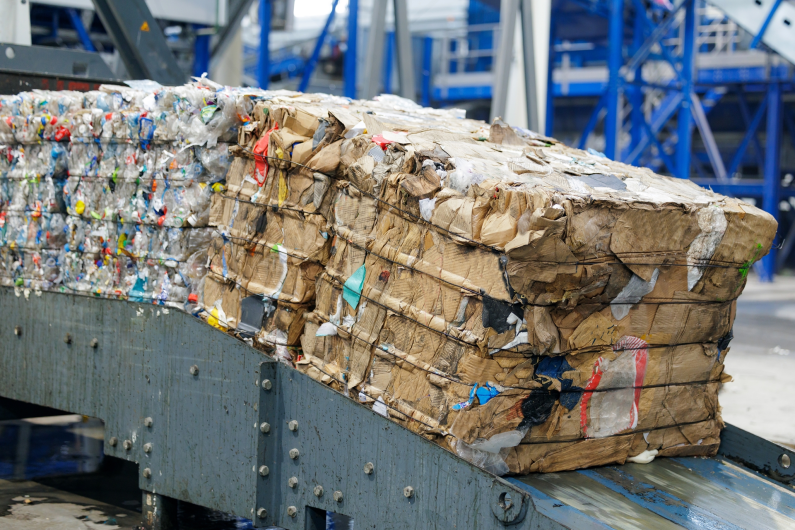
It does not sound especially appetizing. But there is one major misconception that needs to be cleared up right away: no one is adding shredded plastic bottles to cookie dough. Before a former piece of packaging gets anywhere near something edible, it goes through an entire chain of chemical and biological transformations.
So how can plastic become food at all?
How to Feed a Plastic Bottle to Yeast
The main players in this story are microorganisms.
First, the researchers take carbon-containing waste. This can be PET — the same plastic used to make water and soda bottles — or plant biomass, such as corn stalks and leaves left behind after harvesting.
But yeast cannot simply “eat” bottles. The waste therefore has to be broken down into simpler components first. To do this, the team uses a technology called oxidative hydrothermal dissolution, or OHD. The raw material is treated with water and oxygen at high temperature and pressure. As a result, complex materials break down into simpler water-soluble organic compounds. These can then be used as a nutrient medium for microorganisms.
The researchers use different strains of yeast and engineer them to produce the substances they need. Some microorganisms generate protein-rich biomass. After processing, this becomes the base for µBites: starch, fiber, and a sweetener are added, and the resulting mixture is loaded into a food-grade 3D printer. It is then shaped into small snacks.
But the team did not stop at a protein base.
Graduate student Sandhya Jayasekara is working with ordinary baker’s yeast, Saccharomyces cerevisiae. It has been modified so that it converts ferulic acid, which can be obtained from plant waste, into vanillin — the compound responsible for the familiar aroma of vanilla.
Another strain, Rhodosporidium toruloides, can use ethylene glycol — one of the compounds produced when PET is broken down — to make beta-carotene. This is the same orange pigment found, for example, in carrots, and it serves as a precursor to vitamin A.
The result is a rather unusual food chain. Waste becomes feedstock for yeast, and the yeast then produces substances that can be used in food.
What is more, the scientists are gradually learning how to obtain not just one ingredient this way, but several at once: a protein base, aromatic compounds, and nutritional components.
But this is where a problem arises that neither high pressure nor genetic engineering can solve. Even if laboratory tests show that the resulting product is suitable for further study, people still have to be willing to eat it.
And the phrase “cookies made from a plastic bottle” does not exactly help with that.
Would You Eat It?
A vanilla-flavored cookie sounds perfectly ordinary. A cookie made partly from raw material that was once a plastic bottle sounds very different. Even if the PET was broken down long ago and the final compounds were produced by yeast, psychologically it is not easy to forget the word “plastic.”
The research team understands this perfectly well. That is why they are now working not only on the nutritional value of µBites, but also on the things that usually shape our attitude toward any food: smell, taste, color, and texture. This is where the experiments with vanillin and beta-carotene come in — the product must not simply be edible, but also look like something a person would genuinely want to put on their plate.
There is, however, some confusion surrounding taste tests. Back in 2024, Southern Illinois University reported sensory testing of an early version of µBites: the product received a score of 6.5 out of 9 on a food acceptability scale, while aroma received the highest rating from participants — 7.33 points. But for the updated version presented in August 2026, the team is still awaiting separate approval for taste testing. According to ACS, it has already been evaluated for smell, and most participants said they would be willing to eat this kind of food in conditions where resources are limited.
And the phrase “in conditions where resources are limited” is key here. µBites were never originally designed as a trendy eco-friendly supermarket snack.
The project emerged as part of NASA’s Deep Space Food Challenge, a competition focused on food technologies for long-duration space missions. Participants had to develop systems that require minimal resources, produce as little waste as possible, and still provide crews with complete nutrition. µBites were among the U.S. projects selected.
The logic of space travel is fairly unforgiving: the farther and longer a crew travels, the harder it becomes to keep transporting fresh supplies from Earth. At the same time, waste will inevitably be generated on board. If some of it can be converted back into raw material, the system begins to operate almost in a closed loop: what would have been thrown away yesterday becomes a source of carbon for producing new food tomorrow.
And space is only the most extreme example. The authors believe a similar technology could be useful on submarines, in areas affected by natural disasters, and in other places where conventional food delivery is difficult. NASA’s Deep Space Food Challenge itself was designed with the expectation that some of the technologies developed for it could eventually find applications on Earth as well.
So Are We Really Going to Eat Waste?
µBites are still a long way from appearing on supermarket shelves. The current cookie cannot be described as a product made entirely from waste: for now, the researchers add starch, fiber, and sweetener separately. In the future, the team wants to teach microorganisms to produce these components as well. And the idea itself is unlikely to be limited specifically to cookies. µBites are primarily meant to demonstrate a principle: the carbon contained in waste does not necessarily have to end its journey in a landfill.
We usually think of plastic recycling quite literally. An old bottle is turned into new packaging, fiber, or another plastic object. Something different is happening here. The original material is first broken down into simple chemical components, and microorganisms then use those components as raw material to create entirely new substances.
In this sense, yeast works like a tiny biological factory. And that idea in itself is not at all exotic: microorganisms have long been used to produce food, enzymes, and pharmaceutical compounds. What is unusual here is the raw material being fed to these “factories.”
That is why the phrase “food made from plastic” is both accurate and slightly misleading. No one is suggesting that we learn how to digest PET. Scientists are trying to extract the carbon it contains, put it through several stages of processing, and use it to create other substances that are suitable for practical use.
And if technologies like these can be made safe, inexpensive, and scalable, the question of the future may no longer be, “Are we really going to have to eat waste?” Instead, we may have to ask how much of what we call waste today could actually still be turned into something useful.
Share this with your friends!

 10
10
Be the first to comment
Please log in to comment