



At the beginning of this century, the "smartphone" sparked a true revolution, combining a phone, camera, navigator, bank, and personal computer into a single device.
It became an extension of the hand and a window into the digital world. But today, even the once-revolutionary smartphone is dissolving into a more organic, distributed, and sometimes invisible ecosystem of devices. The smartphone is yielding ground to a wearable, contextual, and seamless interface, woven into the very fabric of reality. Let's examine which technologies are already wresting key functions and people's attention away from the smartphone today.
The Buzz Around AR Glasses and Ring-Based AI Assistants
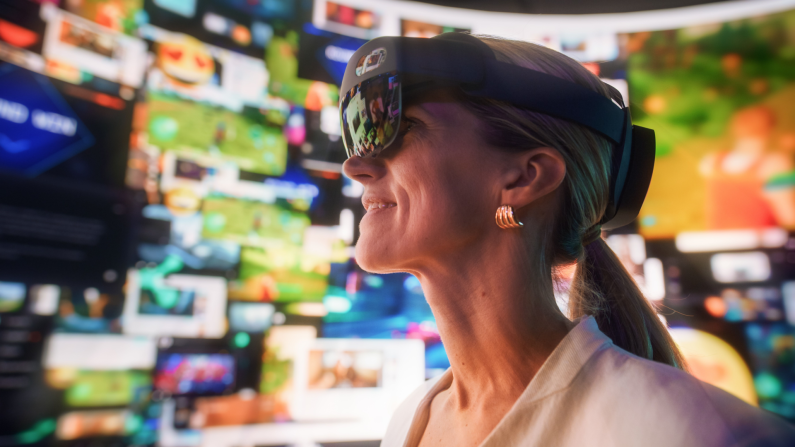
Two seemingly different device classes—augmented reality (AR) glasses and smart rings—are intercepting the smartphone's fundamental roles: that of the primary display and that of the personal controller or identifier.
For a long time, AR glasses remained a tool solely for industry professionals or an expensive toy for enthusiasts. A turning point emerged with the advent of technologies that began to solve key problems: design and ease of use, autonomy, and the presence of real practical utility. Companies like Meta, Ray-Ban, and Xreal bet on style, creating devices almost indistinguishable from regular glasses. This proved critically important for people starting to purchase such devices en masse.
But the main breakthrough lies in changing the very nature of interaction with such technology. The smartphone requires the user to literally "immerse" themselves in it, to lift their gaze from the real world and merely scroll through the phone. AR glasses, in contrast, strive for the opposite: to merge useful digital information with reality.
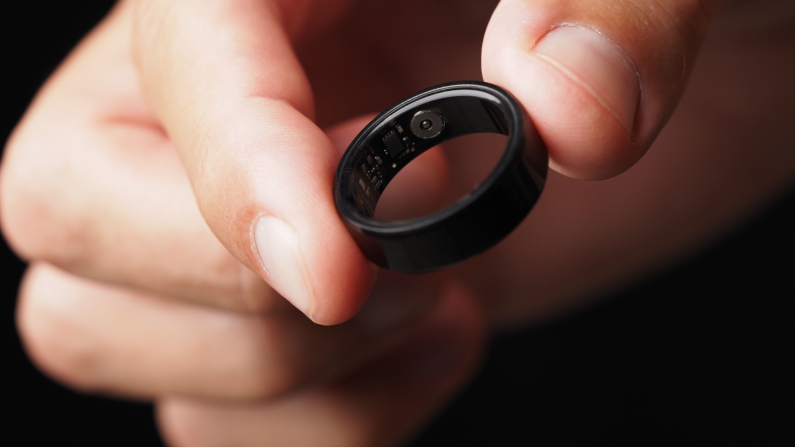
If glasses are primarily a means of visual engagement, then smart rings are for tactile engagement. Originally created as advanced sleep and activity trackers (such as the Oura Ring), they have evolved into universal biometric passports and input devices.
Their advantage lies in a unique position on the body. The wrist, on which smartwatches are worn, is after all not the ideal sensor point. The finger, however, has constant contact with a rich capillary network, allowing it to capture more accurate and diverse biometric data: heart rate variability, body temperature, blood oxygen levels—and to do so 24/7. This transforms the ring into a powerful tool for preventive medicine and stress monitoring.
But the next step is moving beyond monitoring. In 2024, Oura announced a partnership with Google to use the ring as a method for two-factor authentication based on unique biometric indicators. Market rumors suggest that Apple is also developing its own smart ring, seeing it as the perfect companion for the Vision Pro and future AR devices—an inconspicuous controller for mid-air gestures and a biometric identifier.
Component Shrinkage and Autonomy: Industry Trends of Recent Years
For us to now wear VR glasses and smart rings without issues, the industry has undergone significant changes. There are two key trends: significant component reduction or miniaturization, and a shift towards hybrid computing models.
The development of SiP (System-in-Package) and chiplet technologies has enabled the packaging of processors, memory, sensors, and communication modules into tiny, energy-efficient packages. Companies like Qualcomm (with the Snapdragon AR1 platform) and Apple (with the M-series chip for wearables) are creating processors whose power is comparable to smartphone chips from five years ago, yet which have a thermal profile and size that allow for integration into the arm of glasses or the band of a ring.
However, no miniature device can house a battery sufficient to run a powerful chip in constant active mode. The solution lies in the intelligent distribution of tasks. The principle of Hybrid Compute, actively promoted by Qualcomm, assumes that lightweight tasks (processing sensor data, recognizing basic gestures) are performed locally on the device with extremely low power consumption. Complex operations (queries to large language models, rendering complex AR graphics) are sent to the cloud on-demand via ultra-fast 5G and 6G networks.
The development of TinyML—machine learning for microcontrollers—plays a key role here. This allows a device, for example a ring, to constantly analyze the biometric stream and recognize patterns (such as the onset of a panic attack or deep sleep) locally, without wasting energy on transmitting gigabytes of raw data. It sends only the final conclusion to the cloud: "anxiety event" or "user has fallen asleep." This fundamentally changes the economics of autonomy.
Market Leaders
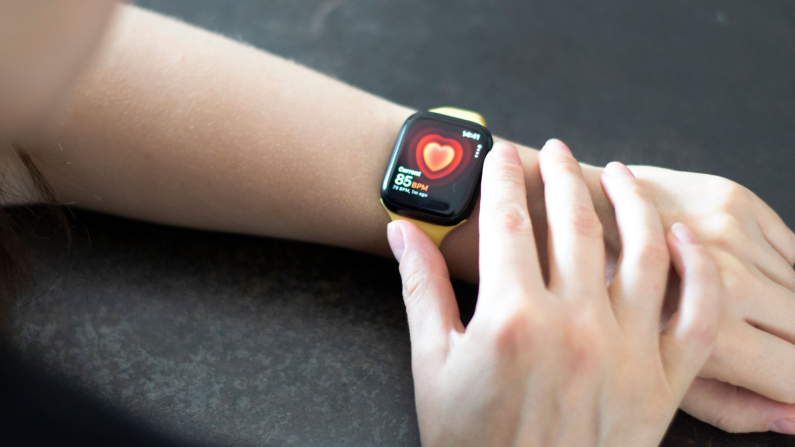
Experts forecast that by 2025-2026, the smart ring segment may surpass the premium smartwatch segment in growth rates. However, this opinion is based not on the superiority of technologies, but on the superiority of the user experience in key scenarios:
- Comfort and unobtrusiveness 24/7. The ring does not need to be removed at night for charging (5-7 days of autonomy has become standard). It doesn't interfere with sleeping, exercising, or typing on a keyboard. This ensures data collection continuity, which is especially valuable for sleep tracking and long-term health analysis.
- Focus on health, not notifications. Smartwatches, especially those on the Apple Watch and Wear OS platforms, are increasingly turning into miniature replicas of the smartphone on the wrist, with a constant stream of alerts. The ring, however, is positioned as a tool for mindfulness and recovery. This aligns with the trend of digital detox and wellness.
- A fashion accessory, not a gadget. From a design perspective, a ring is a piece of jewelry. Brands like Cartier (collaborating with startups like Movano Health) or Swarovski (with its own collections) see this as an opportunity to bring technology into the luxury segment without sacrificing aesthetics.
- An effective biometric sensor. Placement on the finger provides cleaner signals for measuring temperature and HRV, which is important for medical and near-medical applications. The FDA is already considering granting some ring functions (like the Oura Ring for temperature monitoring) the status of Class II medical devices, which increases trust in the data.
Thus, watches are taking on the function of a "second screen," while the ring becomes a "sixth sense," a continuous biometric background. But the fundamental shift lies not in abandoning technology, but in its integration.
Share this with your friends!


 10
10
Be the first to comment
Please log in to comment