


Every new medical drug undergoes numerous trials before it reaches the market. Sometimes this takes decades. However, in the digital age, a method has been invented to test new drugs significantly faster—for instance, by conducting experiments not on real volunteers but on virtual patients. Their organs are complex mathematical models, and their diseases are computer simulations. This has become a true revolution in pharmaceuticals.
Human digital twins—simulations built on extensive arrays of biological and clinical data—allow for testing therapies on virtual populations, predicting treatment outcomes, and optimizing research. Regulators worldwide, including the FDA, are already beginning to recognize the results of such studies, paving the way for a new, faster, and safer drug development model. This approach promises to transform pharmacology, moving it from the realm of mass experimentation to the sphere of precise prediction.
What is a "Digital Organism" – An Anatomy of Data
A human digital twin is not just a 3D model on a screen. It is a high-precision computational model of a biological system, be it a heart, a tumor, or an entire organism. It is "assembled" from vast arrays of data: medical imaging (using data from MRI, CT, and other examinations of a real patient), genomic sequences, results of clinical tests, and scientific publications on biochemistry and physiology.
For example, a digital heart includes models of electrical activity (simulating the conduction system), mechanical contraction (hemodynamics), and even molecular processes in cardiomyocytes. An immune system model describes the interaction of lymphocytes, the production of antibodies, and the cytokine storm. A brain model simulates neural networks and the spread of neurodegenerative proteins, as in Alzheimer's disease.
Such models are created by specialized software development companies, bioinformatics startups, and large pharmaceutical giants. The goal is to create a predictive platform where hypotheses, drug molecules, and treatment strategies can be tested with minimal risks and costs.
How Drugs are Tested on Virtual Patients
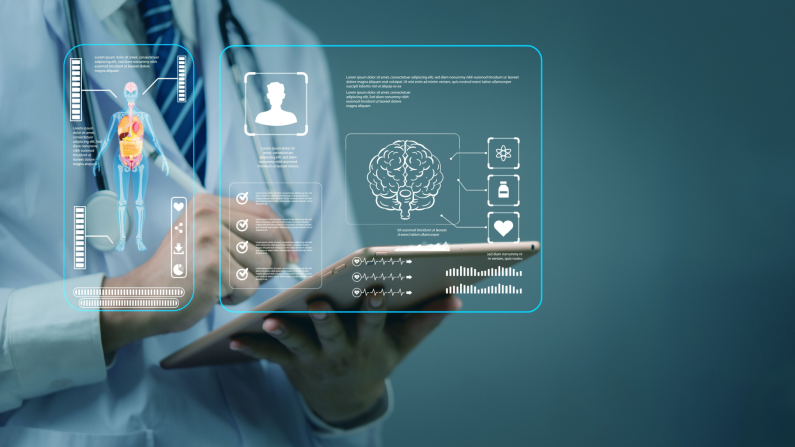
The process begins with the creation of digital twins. Researchers set parameters: sex, age, genetic features, disease stage, comorbid pathologies. Algorithms generate thousands of unique "patients." Accompanying information about various physiological and other characteristics is taken from fundamental scientific databases, clinical research databases (which include anonymized data of thousands of patients from previously conducted clinical trials, large biobanks, oncology registry databases), and the personal data of a specific patient. Considering that creating a basic platform for drug testing takes years and millions in investment, customizing the model for a specific patient is a process that takes only a few weeks.
Then, the investigational drug is introduced into the simulation. The model calculates its pharmacokinetics (this is the study of the body's effect on a medical drug): how it is distributed through tissues, metabolized, and excreted. At the next level, pharmacodynamics is assessed: how the drug molecule binds to targets, i.e., receptors, which biochemical cascades it triggers, and what final effect this leads to—a reduction in tumor size, normalization of heart rhythm, or a decrease in glucose levels.
The main advantage is speed and scale. In a matter of days, tens of thousands of virtual trials can be conducted, assessing the therapy's efficacy and safety for different patient subgroups—something that would take years and cost hundreds of millions of dollars in the real world.
A Revolution in Drug Registration: The FDA and Digital Trials
Regulators, including the U.S. Food and Drug Administration (FDA), have actively engaged with this agenda. The agency launched the Innovative Science and Approaches in Regulatory Practice (ISAP) program. Within its framework, the first medical devices have already been registered, approved solely based on computer modeling data, without conducting traditional clinical trials on humans.
For example, in 2020, the FDA approved a device for treating cerebral circulatory disorders, the efficacy of which was proven through computer modeling of blood flow in 128 virtual patients.
Today, modeling does not completely replace the classical stages of clinical research but is becoming an integral part of them. It is used to optimize study design, determine the most promising dosages, and identify patients with the highest likelihood of response. This accelerates the process and reduces the risk of failure at the final, most expensive stages.
Limitations – Biological Complexity and Unpredictability
Despite progress, a digital twin is still a simplified copy of a human. The main challenges lie in the area of complexity:
-
Multi-scale complexity. It is difficult to unite the level of molecules, cells, organs, and the whole organism in a single model.
-
Individuality. It is impossible to digitize all aspects of an individual's unique biology, including the influence of the microbiome, lifestyle, and unstudied epigenetic factors.
-
Emergence (a system property where its new qualities arise from the interaction of its components and are not inherent to them separately). Living systems are capable of unpredictable behavior, where the simple interaction of elements gives rise to complex properties not embedded in the original model.
The model is always limited by the quality and completeness of the input data.
Market Leaders: Startups from the USA, EU, and Asia
The market for human digital twins is a dynamic ecosystem where several players lead:
-
USA: Company Dassault Systèmes with its Living Heart project has created a highly detailed heart model used by all major cardiac device manufacturers and pharma companies. Startup Unlearn.AI is developing "digital control patients" to accelerate clinical research into neurodegenerative diseases.
-
EU: Within the ambitious Human Brain Project, European scientists are striving to create a full-fledged simulation of the human brain. The French company Novadiscovery uses the JINKO platform to predict the efficacy of oncological and immunological therapies.
-
Asia: The Japanese company KYOTO is actively developing models for drug discovery for rare diseases. Chinese tech giants like Baidu and Tencent are investing in AI platforms for predictive medicine, integrating them with vast arrays of clinical data.
Digital twins are already becoming an indispensable tool that is improving medicine, making it more precise, faster, and safer. This is a transition from a medicine of "trial and error" to a medicine based on prediction, where treatment begins with a calculation in virtual reality.
Share this with your friends!



 10
10
Be the first to comment
Please log in to comment