


Over the past few years, gacha games have come a long way — from a niche “anime hobby on your phone” to one of the most visible and profitable segments of the industry. Today, they are no longer just “five-minute mobile games,” but full-fledged services with large budgets, voice acting on the level of TV series, lore spanning dozens of hours, and communities capable of generating more hype around a single character than around the release of a new console.
If you have ever caught yourself thinking, “Okay, just one more ten-pull — and that’s it, honestly,” then you already understand what we’re talking about. If not — let’s break everything down in plain human language.
What are gacha games and why are they so popular?
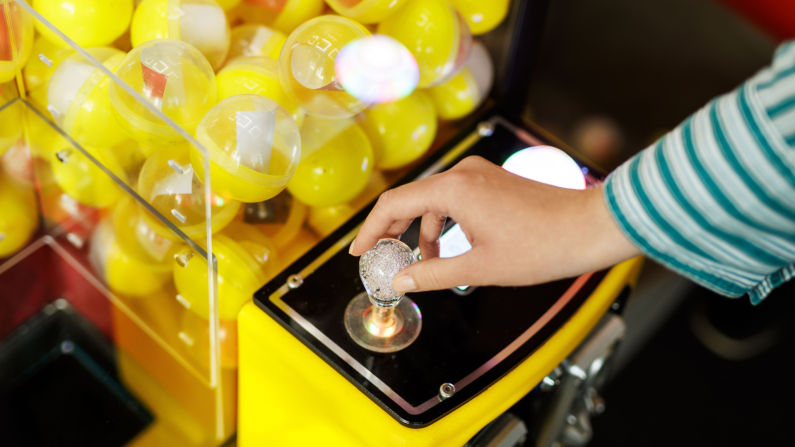
“Gacha” is a word from Japan, derived from gashapon machines: you insert a coin, turn the handle, and get a random toy. In games, the principle is the same — except instead of toys, you get characters, weapons, or rare artifacts. Yes, these are loot boxes, but wrapped in the format of a “living game” that is constantly updated.
The key concept here is the banner. This is a time-limited “showcase” (event) where the drop rate for a specific character or weapon is increased. People essentially live for banners: they save currency for weeks, do daily tasks, clear events, all to log in on the right day and say the sacred words, “Alright, let’s pull.”
How this works in practice:
- Every gacha has rarity tiers (conditional 3★/4★/5★ or equivalents). The most desirable ones are “legendaries” / SSR / 5★ — those very characters that can change team compositions and often become the face of a season.
- Pulls are usually done in batches: a “ten-pull,” a “twenty-pull” — whatever suits you. And almost always there is a pity system: the longer you go without pulling a high-rarity item, the higher the chance becomes, and sometimes there is even a guaranteed event character. That’s why players don’t just “roll randomly,” but plan: “I’ve saved 80 pulls, ten more and I hit guarantee.”
- Limited characters are the cherry on top. They appear on a banner, disappear, and then may not return for months. That’s why every self-respecting gacha player has a sacred spreadsheet of “who I’m waiting for / who I’m saving for / who I’m skipping so I don’t go bankrupt.”
The first gacha games appeared en masse in the early 2010s on mobile platforms, but the real boom began when developers learned how to combine the thrill of collecting with full-fledged gameplay and regular updates. Gacha turned out to be the perfect “game-as-a-service” model: free entry, seasonal content, and player emotions being fed at exactly the moment when you’re almost “satisfied.”
Today, China is considered the main supplier of gacha hits. It is Chinese studios that set the tone of the market — in terms of number of releases, production quality, and audience scale. Major gacha projects attract tens of millions of players worldwide and regularly appear among the highest-grossing mobile games.
New releases and upcoming projects: what to watch
The gacha market never sleeps, and new projects appear almost every month. After all, new releases always promise “something more”: fresh worlds, new gameplay formats, and yet another character players will save currency for over weeks. Right now, two projects have particularly caught our editorial team’s attention.
- Arknights: Endfield
One of the most anticipated gacha releases of recent years. If you missed the original Arknights: it was a tactical tower defense strategy where you place units on the map and quite literally “draw” victory through positioning and timing.
Endfield expands the scale and moves toward a full-fledged 3D RPG: more exploration, more freedom of movement, tactical combat, and the feeling that “we’re not just farming missions — we’re living in this universe.” It’s said that Endfield will appeal to fans of Satisfactory — there is also a strong focus on construction, resource processing, and planetary development.
- Ananta
Ananta (formerly known as Project Mugen) is an open-world action RPG with an urban setting. The simplest description is “anime city, freedom, parkour, and gacha.” Instead of fantasy fields and castles, you get a metropolis where you can race through the streets, jump across rooftops, and dive into real-time combat.
The main hook is the sense of modernity: style, pace, urban aesthetics, and characters who look like heroes from a trendy music video rather than yet another medieval epic. Ananta is clearly targeting an audience that wants “like GTA, but with anime magic and a team of favorite characters.” If the developers manage to maintain the balance between freedom and content, this could become one of the most talked-about gacha games in the near future. If anything, the game has not been released yet, it is promised to be released by the summer of 2026.
Gacha games for space lovers
From grand space operas to intimate romantic stories — space-themed gacha games can be very different, but they almost always captivate with atmosphere and scale. Especially the ones below!
- Honkai: Star Rail
A turn-based RPG in a science fiction setting from HoYoverse. The game was released about two years ago, but it still confidently holds top positions in both popularity and iconic characters.
Its strength lies in a dense “space adventure” narrative: you travel between worlds aboard a cosmic express, get pulled into planet-scale conflicts, and assemble a team of heroes, each with their own pain, motivation, and signature drama. To be very specific: this is the game where you can play as a hero with a Stellaron — a source of destructive power — sealed inside them, while also discovering new worlds like a space-age Columbus. The game’s audience is still active and loud: in 2025, the character Phainon took second place among the most popular male characters at the Chinese TapTap Game Awards — and that says something.
- Love and Deepspace
A space-themed gacha in the otome (romance game) format, aimed primarily at a female audience. Here, the focus is not on “meta builds” and boss damage, but on dialogues, relationships, choices, and emotional scenes. And no, this is not just a dating simulator! There is nothing left of the fourth wall, because the characters speak directly to you; they sing for you, text you, compliment you, and — if you want — can even keep a daily planner for you and remind you of important events. Like a virtual pet, except a virtual… man. By the way, it was a character from this game (Sylus) who beat Phainon on TapTap and took first place!
The game also stands out by turning the space setting into a romantic fantasy: mysterious missions, danger, intimacy — all presented through close-up anime cinematography. So now you know what to recommend to your girlfriend the next time she calls you a “nerd.” Just show her this game, and soon you’ll be able to call her that too.
- Outerplane
This is a classic turn-based RPG gacha with a focus on story and characters, without a giant open world or endless “run back and forth” segments. If you prefer the “campaign + tactical battles + progression” format — this is exactly it.
In terms of vibe, Outerplane is a mix of space themes and fantasy: heroes, factions, intrigue, cutscenes, and the feeling that you’re watching an anime series where you also get to choose whom to develop. The game can appeal to those who enjoy thoughtful combat and narrative, not just speed and reflexes.
Magic-focused gacha games
We really won’t dwell on Genshin Impact — even people who have never pulled banners know this game. So instead of another retelling, let’s look at magic gacha games that approach the genre in a more unconventional way.
- Reverse: 1999
A gacha that hooks you not with world scale, but with atmosphere and presentation. Visually, Reverse: 1999 looks like a living retro film or old animation, while the story revolves around time travel, alternate history, and magic that feels strange and slightly unsettling.
The main effect is a sense of mystery: it feels like reading an unusual novel where every event is slightly “out of place.” For example, characters may discuss a catastrophe that, for some, has already happened, while for others, is yet to occur — and for a long time you don’t understand which time period you yourself are in. The game appeals to those who value style, mood, and a sense of enigma, rather than just damage numbers.
- Black Clover M
Black Clover M is a gacha RPG based on the popular manga and anime — but not the kind where they just “slap on a license and start selling banners.” Here, magic is not just a visual effect, but the core of the combat system: who buffs whom, who breaks enemy defenses, how to properly build combos and control.
Even if you’re not a fan of the original Black Clover, the game is easy to воспринимать as a clear, team-based RPG with well-defined character roles. For example, some heroes specialize in buffs and team support, others in breaking defenses and explosive damage — and without the right combinations, bosses will literally tear your team apart. And for anime fans, it’s also a chance to personally assemble the very squad they previously could only watch on screen.
Action- and skill-focused gacha games

Action gachas are the genre’s response to the criticism that “everything in gacha is decided by luck.” Here, how you play matters: timing, dodges, parries, understanding enemy patterns. Yes, a strong character helps — but they won’t do the work for you if you miss timings and fail to read the fight.
- Punishing: Gray Raven
A dynamic action game in a post-apocalyptic world where humanity is barely holding on by sheer will and steel. Combat here feels almost like a slasher: sharp attacks, fast dodges, a brutal tempo, and a constant sense that mistakes are costly.
For example, many bosses deliberately “punish” greed: one extra hit instead of dodging — and your character is simply wiped from the arena. That’s exactly why the game is loved for its fair difficulty and combat system, where characters are not just “cards,” but fighters with their own rhythm and timing. A great option for those who want a gacha where skill truly matters.
- Zenless Zone Zero
An action game from HoYoverse with an urban setting and insane style. This is not a story about a long journey across a world, but a series of concentrated, flashy combat episodes — short, loud, and adrenaline-filled.
Zenless Zone Zero stands out for its aesthetics: street-inspired, musical, slightly chaotic, and for characters who look like each of them could be the main hero of their own show. For example, characters often interact with each other directly during combat — exchanging lines and commenting on what’s happening, reinforcing the feeling of “team chaos.” A game for those who want less fantasy fairy tale and more raw energy.
- Wuthering Waves
Wuthering Waves was released in 2024 and quickly attracted players who felt constrained by overly “soft” action gachas. This is an open world with dark post-apocalyptic lore: ruins, strange entities, and the sense that the world has survived a catastrophe and is now trying to piece itself back together.
The main reason people love the game is its combat. Parries, combos, precise timing, and a strong sense of impact make each fight feel almost like a duel. For example, some enemies require you to literally “read” their movements and catch the perfect moment for a counterattack — without this, even a well-leveled character won’t save you. Here, the enjoyment comes not only from drops, but from mastering the mechanics.
Gacha games with dark narratives
Gacha games with grim, mature storytelling have gradually become a distinct direction. They feature fewer “bright fireworks” and more pressure: moral choices, psychological fractures, and the feeling that the world is under no obligation to be kind to the player.
- Limbus Company
One of the most unusual gacha games on the market, inspired by classic literature. The characters here are not fearless heroes, but broken people with pasts that constantly resurface.
For example, one character may suddenly “break down” during a mission due to past trauma, and this is reflected not only in dialogue, but in combat mechanics as well. The story is delivered through symbols, allusions, and heavy scenes that sometimes feel more like theatrical performances than traditional gacha storytelling. An excellent choice for those who enjoy games that don’t “chew everything for you.”
- Path to Nowhere
A crime-themed gacha where you command a unit tasked with controlling people with superpowers — and not always voluntarily. It’s a story about power, responsibility, and situations where there simply is no “right choice.”
For example, in certain storylines, you must choose whether to sacrifice one character to save a city, or attempt to save everyone while knowing the consequences will be worse. The game captivates with a thriller atmosphere: charismatic and dangerous characters, tense dialogues, and a plot that regularly ventures into moral discomfort.
And finally: which gacha games are best for beginners?
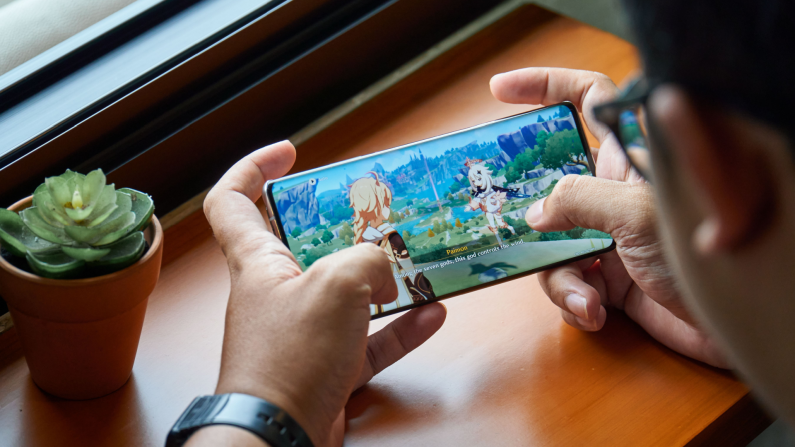
For those who want to get acquainted with the genre and “feel” what gacha is like, without the sensation of being thrown straight into endgame spreadsheets and forced to calculate percentages. For a starting point, we would recommend Genshin Impact, simply because it has already become a classic. It offers clear action gameplay, a large world that is enjoyable to explore, and progression that doesn’t require a newcomer to be a build genius. During the first dozens of hours, you’ll be “traveling and discovering” far more than wrestling with math.
Honkai: Star Rail is also good for beginners because turn-based combat gives you time to think. It’s easier to understand character roles and team logic here: who heals, who breaks defenses, who finishes enemies. Plus, the game guides you through the story and mechanics gently, without feeling like a school lesson.
Gacha games continue to evolve, gradually blurring the line between mobile projects and “big” games. And judging by the number of releases and audience interest, the genre will remain one of the most visible parts of the gaming industry for a long time — simply because it knows how to give people what they love: collections, the emotional thrill of anticipation, and stories they want to return to.
Share this with your friends!

Lexy Crow




 10
10
Be the first to comment
Please log in to comment