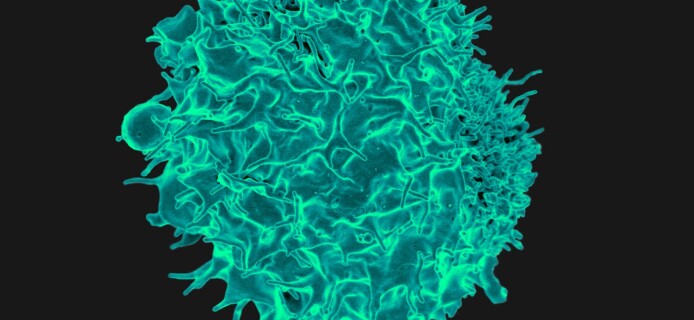
The ocean is, and the habitat of the species unknown to modern science as well as the least explored place on our planet. The Smithsonian Institution biologists have recently discovered microscopic larvae from which new creatures - so far unknown to man - may be borne.
Scientists at Fluid Interfaces Group organization have created a sensor that collects data on biological composition of saliva. The device that is fixed to a patient’s cheek can completely replace blood tests.
In just a few years, scientists are hoping to achieve a breakthrough in diagnostics and treatment of oncological diseases. Modern technologies like artificial intelligence and VR are already finding widespread...
Space flights adversely affect astronauts’ health. Particularly affected are their muscles and bones, therefore astronauts have to undergo long courses of rehabilitation after space expeditions. However, ISS specialists have developed a method to make them considerably shorter.
Scientists from the University of Maryland have transported a human kidney using a drone, followed by successful transplantation into a critically ill patient. This is the first such case in history.
Modeling the one billion atoms that make up an entire gene of DNA is not easy, but scientists at the Los Alamos National Laboratory have done their best to do so. The model they designed will give an insight into the DNA functioning and help develop treatments for many diseases.
Artificial intelligence developed by scientists from the University of California, San Francisco, has learned to translate human lip movements into speech. What is surprising, is that it works, even if a person does not move his lips, but only thinks about it.
Highly allergic people know all too well that there are moments when an epinephrine injection is the only remedy against a dangerous attack. But it is impossible to permanently carry around a drug-filled syringe, so allergic people’s health is constantly under threat.
There has been talk about the potential of 3D printing in medicine for some time now. At present, it’s not yet possible to print a large, healthy organ, because it takes too much time, killing some cells. A new technology can prevent this.
It is assumed that all animals die as soon as their brains die. However, scientists have recently managed to disprove this fact by restoring brain cell activity in a pig 4 hours after the animal’s death.
3D printing has vast potential for use in medicine. A group of Swiss scientists has recently succeeded in printing a silicon copy of a human heart using a 3D printer. Because this material may be rejected by the body, the experiment was repeated by their Israeli colleagues, using natural tissues.
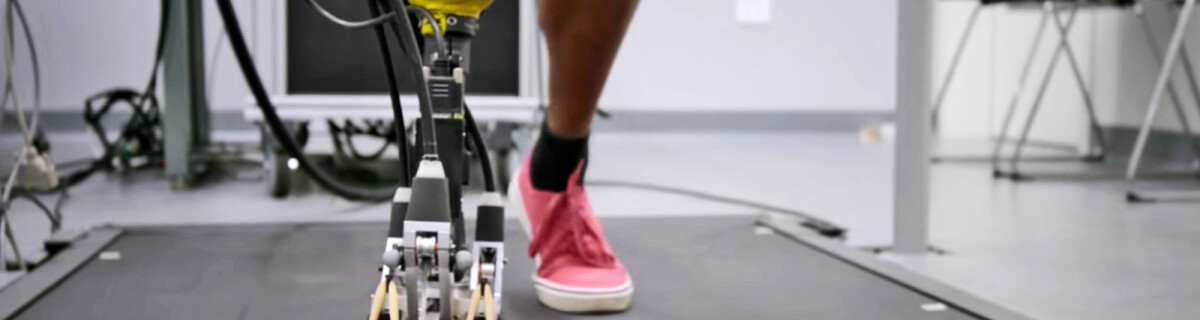
Representatives from Open Bionics have announced the upcoming release of the Hero Arm prosthetic. Hero Arm will be primarily available to residents of the United Kingdom, France and the United States, where the device will be produced in collaboration with Hanger Clinic.
Researchers at the University of Minnesota (USA) have developed a See-Shell skull implant. The device is completely transparent: it will help scientists to monitor human brain in action and reveal the causes of Alzheimer’s and Parkinson’s diseases.
Latest-generation medical devices are usually connected to the global network, so they can be hacked. Scientists at Ben-Gurion University in Israel have demonstrated the consequences.
The flu is an extremely dangerous illness. Its symptoms usually subside after one or two weeks, but many patients often have various complications that stay with them even after the virus is destroyed.
In reality, a “smart city” is far more than sensors at traffic lights, parking payment apps, and 5G connectivity. A smart city is a complex and large-scale ecosystem in which technologies become an organic part of everyday urban life — just like roads, parks, and buildings. In such a city, the infrastructure begins to sense and understand its residents, respond to their needs, anticipate their desires — and, in a way, truly comes alive.
Saudi payment startup Tamara has announced securing a financing package of up to $2.4 billion. The sponsors include U.S. bank Goldman Sachs, financial conglomerate Citi, and private equity funds of Apollo, managed by Apollo Global Management.